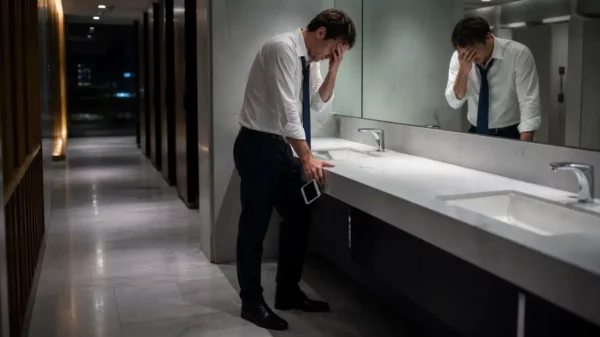


An excuse can sound convincing
“The week was hard.” “Everyone does it.” “I deserved it.” “Others are worse.” “I do not do it every day.” “I just need to relax.” “I will get it together on Monday.” In the moment, these sentences can sound logical and even fair.
An excuse is not always a conscious lie. Often it is a fast way to reduce anxiety, shame and fear of the word “problem.” The mind tries to protect the person from pain: if there is an explanation, you do not have to look directly at the consequences right now.
But if explanations repeat after every episode, they stop being random. They become part of the cycle.
What excuses protect
An excuse protects not the use or behavior itself, but the image of self. It can be hard to tolerate thoughts like: “I am losing control”, “I promised and could not stop”, “I need help”, “I scare people close to me”, “I am hurting myself.”
So the brain looks for a more tolerable version: not loss of control, but fatigue. Not addiction, but stress. Not consequences, but coincidence. Not help, but vacation later.
Why this is risky
NIDA describes addiction as a condition where use or behavior can become compulsive despite harm. NIAAA lists alcohol problem signs such as loss of control, continuing despite problems, craving and unsuccessful efforts to cut down.
Excuses are risky because they do not remove the signs. They only delay the moment when the person recognizes them.
Common excuses and what may be underneath
1. “I am just tired”
Fatigue may be real. But the question is why rest keeps being tied to a substance or behavior that makes things worse later.
2. “I am in control”
Control is better checked through facts, not feelings: how often you stopped at the chosen point and how often the line moved.
3. “I have reasons”
The reasons may be real: stress, pain, loneliness, conflict. But a real reason does not make risk safe.
4. “Now is not the time to deal with it”
Addiction rarely waits for a calm period. If help is always delayed until the perfect moment, that moment may never arrive.
5. “Others are worse”
Comparing downward can calm you, but it does not answer the main question: what is happening to your freedom, health and relationships?
How to tell an explanation from an excuse
An explanation helps you understand the cause and choose an action. An excuse helps nothing change.
For example: “I drank because I was lonely” can become an explanation if it leads to support, a pause and a safety plan. But if everything repeats after that sentence, it is working as an excuse.
A 10-minute practice
Take the last 3 episodes and write down:
- what I told myself before the episode;
- what I told myself after;
- which facts I skipped;
- what small step I might take if I did not excuse it;
- who could hear the truth briefly and without drama.
The goal is not to punish yourself. The goal is to get back the ability to see the cycle.
When to seek support
If excuses repeat, consequences grow, the line keeps moving, loved ones are worried and a pause brings anger or fear, it is better not to stay alone in your head. Support helps separate shame from facts and choose the next safe step.
If there is severe withdrawal, seizures, confusion, hallucinations, suicidal thoughts, self-harm risk or threat to life, urgent help comes first.
FAQ
Why do I always find excuses?
Excuses often reduce anxiety, shame and fear of admitting a problem. They protect the self-image, but can make it harder to see the repeating cycle and consequences.
Do excuses mean I am a bad person?
No. They may be a protective response of the mind. But if they keep a harmful cycle going, it is important to notice them and replace them with honest support.
How do I stop making excuses?
Start with facts: recent episodes, promises, consequences, secrecy and what you do instead of changing access or asking for help.
When should I ask for help?
If excuses repeat together with loss of control, craving, harm, secrecy, withdrawal or risky situations, it is better to discuss this with a professional, group or anonymous chat.
OpenHalt
In OpenHalt you do not have to argue whether the reason is “good enough.” You can write anonymously: “I see that I keep finding excuses.” In chat or a psychologist-led room, you can review recent episodes, separate facts from shame and choose one next step.
If there is severe withdrawal, seizures, confusion, hallucinations, suicidal thoughts, self-harm risk or threat to life, urgent help comes first.
In anonymous chats, you can write to people with similar experience about cravings, relapse, shame, fear, and trying to start again.
Open anonymous addiction chats
In OpenHalt rooms, psychologists and psychotherapists lead focused conversations, help make sense of patterns, and offer a safer next step.
Find specialist-led rooms on this topic
If you want one-to-one support, you can search for a specialist by topic, read their profile, and start with a clear first contact.
Read next
Sources
- NIDA: Drugs and the Brain – supports self-control, compulsivity and repetition despite harm framing.
- NIAAA: Alcohol Use Disorder, From Risk to Diagnosis to Recovery – supports AUD signs, loss of control, craving and continuing despite problems.
- NIDA: Treatment and Recovery – supports help and recovery framing.
- WHO/UNODC: International Standards for the Treatment of Drug Use Disorders – supports an evidence-based care approach.