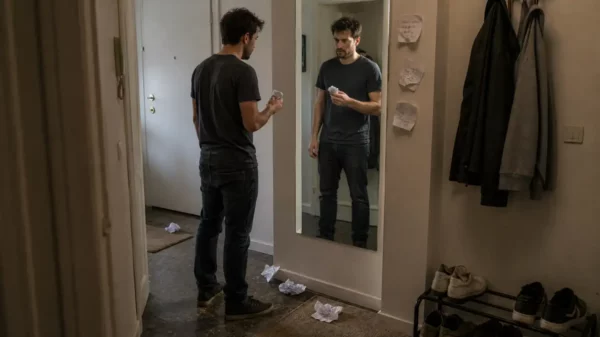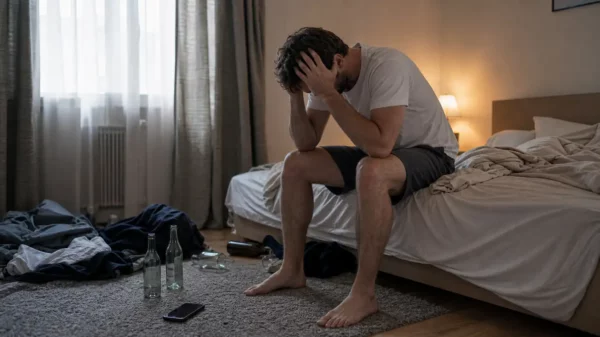


Isolation in crisis is not neutral
After relapse, a binge, substance use, withdrawal or strong craving, a person often wants to hide. Not answer, not explain, not let anyone see what is happening. Shame says, “Handle it alone, you have bothered everyone enough.” Craving says, “No one will know.” Panic says, “Do something immediately.”
That is exactly why isolation can be dangerous in these hours. Not because the person is weak. Because crisis narrows thinking, raises impulsivity and makes harmful decisions feel closer.
If there is self-harm risk, suicidal thoughts, a plan to hurt yourself, confusion, hallucinations, seizures, loss of consciousness, breathing problems or any threat to life, do not stay alone and seek urgent help. OpenHalt does not replace emergency services.
Why being alone can become more dangerous
Alone, it is easier to negotiate with craving. No one sees you opening an app, searching for a contact, getting alcohol, messaging someone from the old circle or deciding “just tonight.” Alone, shame sounds like a fact instead of a state.
Suicidal thoughts, panic and craving often become stronger without external support. NIMH guidance for helping someone with suicidal thoughts highlights being there, keeping the person safe and helping them connect to support. In addiction, the principle is similar: contact can create a pause between impulse and action.
What not staying alone actually means
It does not have to mean a long conversation, confession or the whole story. Sometimes it is enough for someone to be nearby, on the phone or in messages while the wave passes.
- Sit in a room where another person is present.
- Call and ask them not to hang up for 15 minutes.
- Message a chat or support group if there are no emergency signs.
- Ask someone to take keys, money, alcohol, substances or dangerous objects away.
- Make a rule: “I message you before acting, not after.”
The point is to move the crisis out of a closed room. The less secrecy there is, the harder it is for addiction to control the evening or night.
Who to message when shame is loud
Choose not the strictest person and not the one you most want to justify yourself to. Choose someone who can handle a short message without interrogation. It can be a loved one, group member, professional, support room participant or anonymous chat.
If it feels like no one is safe, start with minimum contact: do not explain your whole life, list every failure or ask someone to rescue you forever. Ask them to be with you now.
One message you can send
You can write:
“It is not safe for me to be alone right now. I relapsed or I am close to continuing. We do not need to unpack everything. Please stay in contact with me for the next 30 minutes.”
If there are thoughts of death or self-harm, say it directly:
“I am having thoughts about death and I should not be alone. Help me move dangerous things away and get urgent help if the risk grows.”
If no one is nearby
Then the task is to create contact and reduce access. Move to a place where people are present: a neighbor, reception desk, open public place, help point or any space that is not a closed room. Message support. Open the door. Move substances and dangerous objects out of immediate reach.
If there is immediate danger to life, do not wait for a reply in messages. Contact urgent help or go to the nearest place where people can help.
What a loved one can do
If someone writes that they should not be alone, do not start with accusations. Start with safety:
- ask whether they are alone and where they are;
- ask about self-harm risk, seizures, hallucinations, confusion and breathing;
- ask them to move alcohol, substances and dangerous objects away;
- stay in contact or help find someone nearby;
- if red flags are present, help them seek urgent help.
Trust, consequences and boundaries matter. But not in the first minutes of risk.
After the wave passes
When things calm down, do not erase the episode. Write down when risk appeared, why you wanted to hide, whom you managed to message, what helped and what needs to be removed earlier next time.
That turns the moment from a shame story into a safety plan. This matters especially if isolation regularly leads to a binge, dose, gambling, self-harm or nighttime panic.
FAQ
Why should I not stay alone after relapse?
After relapse, thinking often narrows, and craving and shame get stronger. Contact creates a pause between impulse and action, helps reduce access to risk and makes it easier to choose help in time.
What if I am too ashamed to message people?
You do not have to explain your whole life. You can write one short line: “It is not safe for me to be alone. Stay in contact with me.” Shame can be discussed later. First, get through the wave.
Can I just message a chat?
Yes, if there is no immediate threat to life. Chat can help you not stay alone with shame, craving and fear. But with seizures, confusion, hallucinations, breathing problems or suicide risk, urgent help comes first.
When do I need urgent help instead of chat?
Urgent help is needed with a threat to life, self-harm plan, suicidal thoughts, loss of consciousness, breathing problems, seizures, hallucinations, confusion, severe withdrawal or dangerous substance mixing.
OpenHalt
If there is immediate danger to life, a suicide plan, seizures, confusion, hallucinations, breathing problems or severe withdrawal, urgent help comes first. OpenHalt does not replace emergency services.
If there is no immediate danger, OpenHalt can be the place where you write without shame: “I should not stay alone.” In a psychologist-led room, you can later unpack why isolation became part of relapse and how to set up human support before the next risk point.
In anonymous chats, you can write to people with similar experience about cravings, relapse, shame, fear, and trying to start again.
Open anonymous addiction chats
In OpenHalt rooms, psychologists and psychotherapists lead focused conversations, help make sense of patterns, and offer a safer next step.
Find specialist-led rooms on this topic
If you want one-to-one support, you can search for a specialist by topic, read their profile, and start with a clear first contact.
Read next
- Addiction recovery safety plan
- Self-aggression and addiction
- Addiction recovery: relapse, motivation and family support
Sources
- NIMH: 5 Action Steps to Help Someone Having Thoughts of Suicide – supports the role of presence, safety and connection to help.
- NIMH: Warning Signs of Suicide – supports the list of crisis warning signs.
- NIDA: Treatment and Recovery – supports treatment, support and recovery framing for addiction.
- NIAAA: Treatment for Alcohol Problems, Finding and Getting Help – supports seeking help for alcohol problems.
- WHO: Suicide fact sheet – supports prevention and early help framing.