
“The cat adapted. We didn’t.”
In an OpenHalt conversation, psychiatrist and psychotherapist Lyudmila Lebedeva offers an image that lands immediately: a cat can lie around all day and not worry about what it will eat tomorrow. A human being usually cannot.
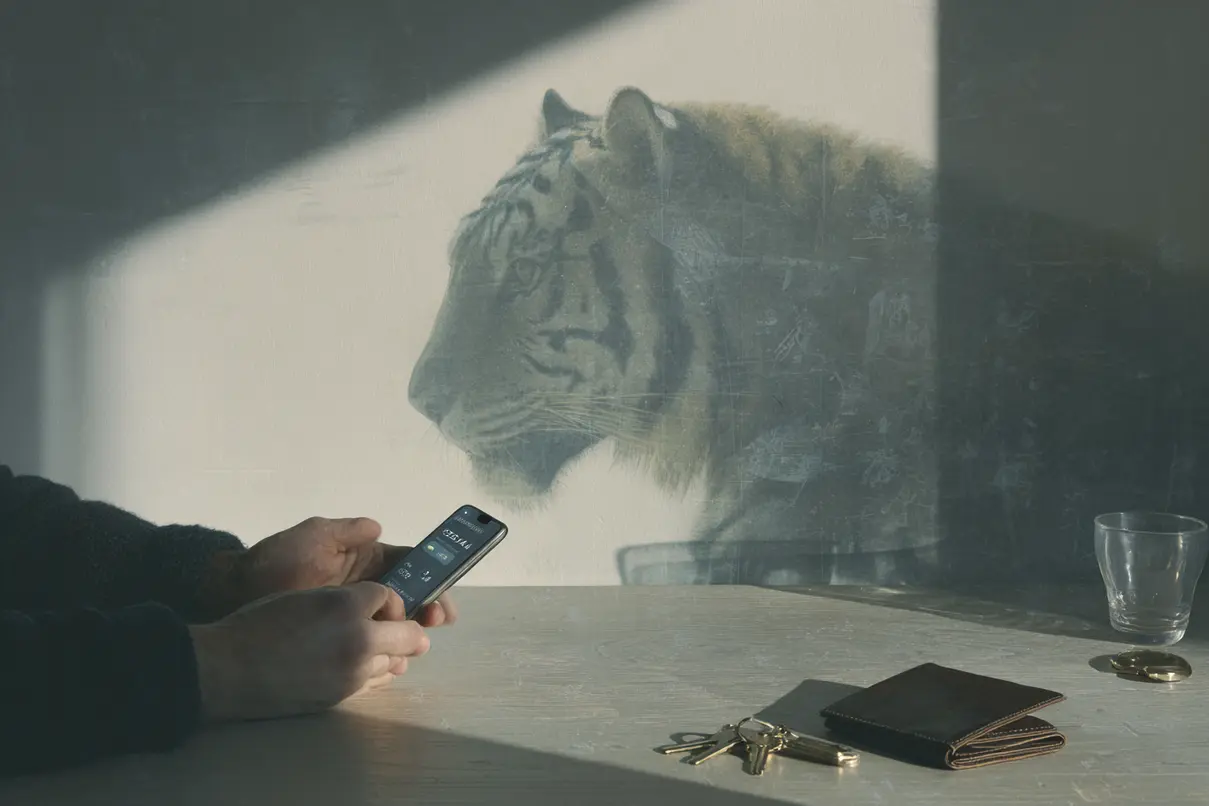
We worry about money, work, other people’s opinions, health, the future, an unanswered message, or a small dog barking on the street. Sometimes the body reacts as if we are not in a city with stores, phones, doctors, and a paycheck coming in two days, but in winter, outside the tribe, with a tiger nearby.
That is the heart of this conversation: anxiety was built to help us survive. But the same old survival system can get too loud in modern life.
Anxiety began as a survival signal
Imagine a person in the Stone Age. If they spent the summer lying in the sun and never thought about winter, food, shelter, neighbors, or wild animals, they might not survive very long.
Anxiety says: get up, check what is unsafe, prepare food, find shelter, stay connected to the group.
The tribe mattered
Lyudmila connects anxiety not only to physical danger, but to belonging. For an ancient human, being pushed out of the group could mean death.
That is why criticism, silence, rejection, or the feeling “I don’t belong here” can hit the body so hard. The brain may not hear “one uncomfortable comment.” It may hear “you could be alone.”
The modern brain still looks for a tiger
The conversation turns to the amygdala, the part of the brain involved in fear. It does not check whether it is living in 2026. It scans for danger using old rules.
A barking dog, a sudden noise, a work email, a low bank balance, or a strange body sensation can all set off the alarm.
Money can feel like safety
Lyudmila says she often asks clients about money: how they feel when there is little left, whether they lend it, how much it worries them.
Money is not just a number. It can stand for food, shelter, control, and the future. A small amount in the account can feel like a threat even when the paycheck is almost there.
When anxiety starts running your life
Everyday anxiety can help us prepare for an exam, a conversation, a move, or an important meeting. The problem begins when anxiety stops letting go and life starts revolving around avoidance.
The person does not just worry. They cancel plans, avoid going out, sleep badly, scan their body, check money and messages, and slowly shrink their world.
When safety is missing inside
One of the strongest ideas in the conversation is this: if a person does not feel safe with themselves, many things can become threatening.
The roots can be different: early attachment wounds, a cold or unavailable parent, trauma, job loss, addiction, chronic stress. Sometimes there is no single beginning. Anxiety builds for a long time and then suddenly breaks through.
Addiction as an attempt to mute the alarm
Alcohol, cannabis, gambling, gaming, or other ways of checking out can look like anxiety treatment. At first, things may genuinely feel quieter.
But the source of anxiety has not disappeared. Alcohol may dull perception for a while, then anxiety can return in a stronger wave. The loop becomes familiar: anxious – numb it – crash – more anxiety – numb it again.
Panic attack: the body thinks you are dying
A panic attack can feel like a disaster inside the body. The heart races, breathing changes, fear spikes, and the person may think they are dying or losing control.
Biologically, the body is trying to protect. Subjectively, it can feel terrifying.
Avoidance helps first, then traps you
After a panic attack, a person may begin avoiding streets, stores, public transit, people, or hard conversations. At first, avoidance brings relief. Later, the world gets smaller.
This is not laziness. It is a protection system that has started overprotecting.
Anxious people can be strong in a crisis
There is a surprising point in the conversation: anxious people often function very well in a real emergency. They have rehearsed bad scenarios in their minds many times.
The problem is not that they “can’t think.” The problem is that the mind keeps rehearsing catastrophes that may never happen.
Where are the good scenarios?
Lyudmila asks clients a simple question: “You imagined every bad outcome. Why didn’t you add any good ones?”
An anxious imagination often moves in one direction. It builds a detailed disaster, but does not automatically offer the version where you cope, ask for help, get through the conversation, wait for the paycheck, or ride out the panic.
What you can do with the body
Lyudmila starts with simple tools because people in anxiety rarely have capacity for complicated routines.
One option is a short inhale, a long exhale, and a gentle breath hold for as long as it feels comfortable. Another is a deep inhale, a small second inhale on top, and a slow exhale through pursed lips, as if through a straw.
You can also wash your face with cold water, use a strong body sensation, move your eyes gently, or build a short nighttime breathing practice. Not as magic. As a signal to the nervous system: we are here now.
When to get help
If anxiety lasts, disrupts sleep, work, relationships, eating, leaving the house, or concentration, or if panic attacks and fear of panic start shaping your life, it is time to reach out.
That might mean a psychologist, psychotherapist, or psychiatrist. Sometimes medication is part of care, but it should be chosen by a clinician. Self-prescribing, mixing medication with alcohol, or relying on sedatives with dependency risk can create new problems.
Practical steps
- Ask yourself: what made me feel unsafe right now?
- Check the basics: food, sleep, body, money, home, connection.
- Take several short inhales and long exhales.
- Try a deep inhale, a small second inhale, and a slow exhale.
- Wash your face with cold water or hold something cold.
- Write the feared scenario and add one version where you cope.
- Do not use alcohol, substances, gambling, or gaming as your only anxiety tool.
- If anxiety is shrinking your life, reach out for professional help.
- If you are thinking about harming yourself, contact emergency help or a local crisis service immediately.
FAQ
Why do we feel anxious when there is no real danger?
Because the brain reacts not only to visible danger, but to possible danger: money, judgment, health, loneliness, and the future.
What is the difference between fear and anxiety?
Fear usually has a clear object. Anxiety often points toward the future and asks: what if something happens?
Can alcohol reduce anxiety?
It may temporarily numb the feeling, but it does not solve the source of anxiety. For many people, anxiety returns stronger afterward.
What should I do during a panic attack?
Remind yourself that this is a wave of intense anxiety, slow the exhale, anchor in the body, and use the environment around you. If symptoms are new or resemble a medical emergency, get medical evaluation.
When should I get professional help for anxiety?
When anxiety lasts, shrinks your life, disrupts sleep, work, relationships, or leaving the house, or leads to substance use, gambling, isolation, or self-harm thoughts.
OpenHalt
Sometimes anxiety turns an ordinary day into a constant emergency: the body is tense, thoughts keep running ahead, and the mind searches for danger everywhere. If you know that feeling, you do not have to wait for it to pass alone.
In an anonymous chat, you can write about what is frightening today: panic, sleeplessness, spiraling thoughts, the urge to numb yourself, or simply being tired of living on alert.
Join the chat about anxiety and panic
Important: This article does not replace medical or mental health care. If anxiety is leading to thoughts of self-harm or suicide, you feel unable to stay safe, or symptoms may be a medical emergency, contact local emergency services or a crisis service immediately.