
Katya’s story: when nutrition tools were no longer enough
When someone feels deeply unwell, they often want to start with something that feels safe: magnesium, vitamin D, omega-3, ashwagandha, or one more supplement recommended online. Buying a bottle can feel easier than saying: I am not okay, I need a doctor.
In this OpenHalt conversation, Masha Nikolaeva speaks with Katya Tereshchenko, a clinical nutritionist and eating behavior specialist. The question sounds simple: can supplements help with depression? The honest answer is more nuanced. Supplements may support the body when they are appropriate, but they do not replace a psychiatrist, therapy, lab work, sleep, food, or prescribed treatment.
Katya also speaks from experience. Her depression developed against a background of disordered eating, anxiety, family stress, and long-term exhaustion. She tried to support herself with the tools she knew. At one point, she had to admit that nutrition alone was no longer enough.
Disordered eating, anxiety, and exhaustion
Katya talks about growing up with painful body image, later dieting, restriction, overeating cycles, and fixation on her figure. Then came difficult external stressors and a long period of emotional load.
Her depression did not arrive from nowhere. It grew out of accumulated strain.
The Beck scale and seeing a psychiatrist
Katya describes a state where life looked good on paper, but inside it felt unbearable. Nothing brought joy. She stopped wanting to dress up, socialize, or do the things that usually felt like her. There was heaviness, withdrawal, and hopelessness.
She took the Beck Depression Inventory, saw a moderate score, and went to a psychiatrist. That was not weakness. It was care.
How depression can show up through food and the body
For some people, depression lowers appetite. For others, it increases it. Some notice cravings, obsessive food thoughts, binge patterns, fear of weight gain, or the return of old eating disorder patterns.
If someone has a history of disordered eating, strict nutrition protocols can backfire. The body needs support, not another punishment.
Doctor first, bottles second
Katya warns against the internet logic of “someone recommended it, so I’ll take it.” Not because every online idea is useless. Because people often copy someone else’s solution without their own labs, history, medications, or risks.
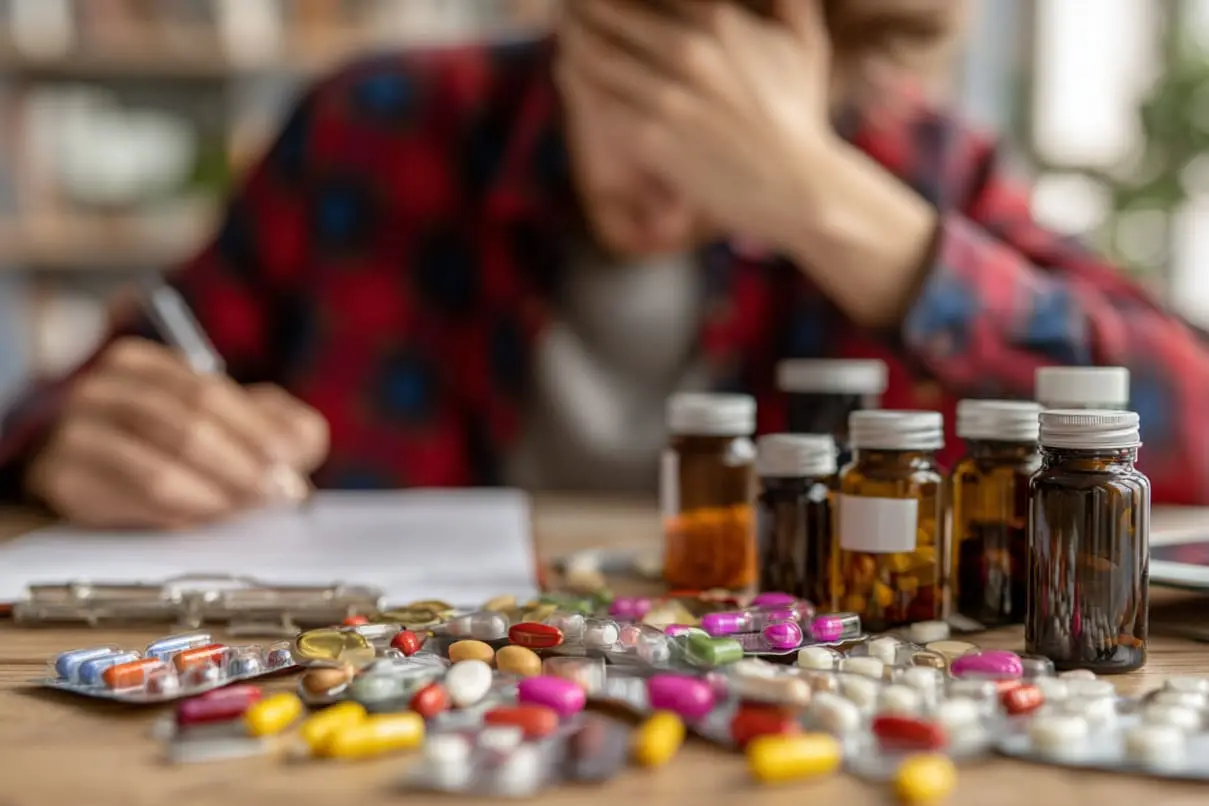
She remembers a client with a whole shelf of supplements. Each bottle was a small hope. None of them solved the actual problem.
Lost time
The biggest cost of self-treatment is often time. Instead of checking thyroid function, ferritin, vitamin D, or talking to a psychiatrist or therapist, a person keeps testing capsules.
Meanwhile, depression may keep deepening.
The base: sleep, digestion, and protein
Sleep
Katya names sleep first. Without recovery, the nervous system struggles. Hormones and neurotransmitters do not handle stress well. One late party is not the issue. A chronically broken sleep rhythm can be.
Gut health and the microbiome
Katya also talks about digestion, vegetables, fermented foods, and the microbiome. If digestion is not working well, even good food and supplements may not be absorbed well.
Bloating, stool changes, pain, or strong food reactions are reasons to seek professional guidance, not just buy another probiotic.
Protein
Neurotransmitters are not built from air. The body needs amino acids. Regular protein can be a basic act of care: eggs, fish, meat, cottage cheese, legumes, or other sources that fit the person.
What may support, but not treat
Magnesium
Katya speaks most gently about magnesium. She mentions forms such as malate in the morning and bisglycinate in the evening. Still, even magnesium should be discussed with a professional if a person takes medication, is pregnant, or has kidney, liver, or other health issues.
Vitamin D
Test first, dose later. Vitamin D can matter when there is deficiency, but it is not something to take endlessly by guesswork, and it is not a standalone depression treatment.
Omega-3
Omega-3 is studied as possible additional support. It is better to frame it carefully: it may be supportive for some people, but it does not replace treatment.
Ashwagandha and rhodiola
Adaptogens sound gentle, but they are not automatically harmless. Ashwagandha may have side effects, including rare liver-related concerns. Extra caution is needed with alcohol use, medications, liver conditions, pregnancy, or complex health histories.
What can cause harm
Iron is not a universal cure for fatigue. High-dose B vitamins are not harmless candy. Herbs such as St. John’s wort can interact with antidepressants and other serotonin-related supplements.
Natural does not automatically mean safe.
A psychological view
Depression makes people crave one clear action: buy the thing, start the course, feel in control. That makes sense. When energy is gone, “doctor, labs, therapy, sleep, food” can feel like a mountain.
But depression is not a one-capsule deficiency. Sometimes deficiencies are present and need correction. Sometimes sleep, gut issues, thyroid function, eating disorders, alcohol, anxiety, chronic stress, and medication all matter at once.
Supplements are not the enemy. Avoiding help through supplements is the risk.
What you can do
- Track symptoms: sleep, appetite, energy, interest, anxiety, hopelessness, thoughts of death.
- If symptoms last more than two weeks and interfere with life, book a psychiatrist or psychotherapist.
- Do not stop or change antidepressants without your prescriber.
- Before supplements, discuss labs such as vitamin D, ferritin, B12, thyroid markers, and others as appropriate.
- Do not take iron, iodine, high-dose B vitamins, or herbs “just in case.”
- Start with the base: sleep, regular meals, protein, vegetables, water, gentle movement.
- If you have an eating disorder history, avoid restrictive protocols without a care team.
- Tell your doctor about every supplement, herb, and vitamin you use.
- If you have suicidal thoughts or may harm yourself, seek urgent help immediately.
FAQ
Can supplements treat depression?
Supplements should not be treated as the main treatment for depression. They may support the body in some deficiencies or situations, but they do not replace psychiatric care, therapy, medication, sleep, or nutrition.
Which supplements are most often discussed for depression?
Magnesium, vitamin D, omega-3, B vitamins, adaptogens, St. John’s wort, SAMe, and 5-HTP are commonly discussed. Each can have limitations and interactions.
Can supplements be taken with antidepressants?
Not always. Some herbs and supplements can interact with antidepressants and increase side effect risks. A doctor should review them.
Why not take iron or vitamin D without tests?
Because symptoms can have many causes, and dosing can be wrong. Too much or unnecessary supplementation can cause harm.
When should someone see a psychiatrist?
When low mood, loss of energy, sleep or appetite changes, loss of interest, or hopelessness last more than two weeks and interfere with life. Thoughts of death require urgent help.
Conclusion
Supplements can be part of caring for the body when they are chosen thoughtfully. They should not become a curtain behind which someone keeps suffering alone.
Katya’s story is honest: you can know a lot about nutrition, gut health, sleep, and supplements and still reach a point where you need psychiatric care. That is not failure. That is self-care.
OpenHalt
OpenHalt talks about depression, exhaustion, and mental health without shame and without magic promises.
If you recognize yourself in this article, start with a conversation, not another bottle. Supplements can support the body, but they should not become a way to stay silent, delay seeing a doctor, or keep carrying everything alone.
In OpenHalt, you can join an anonymous chat and write what is happening: no energy, anxiety, fear of seeing a specialist, questions about supplements, medication, old eating patterns, or the feeling that nothing is helping.
You do not have to explain it perfectly. One sentence is enough: “I am not okay, and I do not know what to do next.”
If you are thinking about death, may harm yourself, or feel unsafe, seek urgent help first: emergency services, a doctor, a crisis line, or someone nearby who can stay with you right now.