
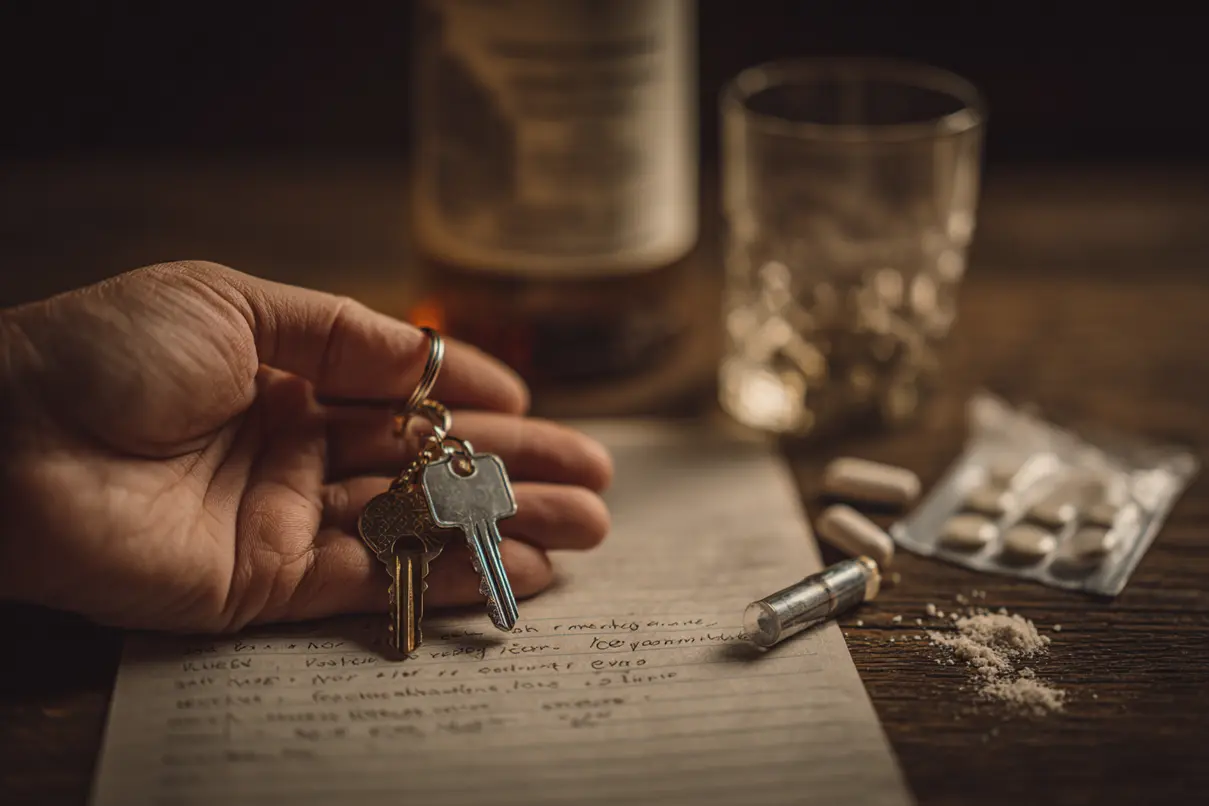
“My family matters,” but the substance wins again
In rehab and therapy, people often say: family, children, work, health. And often they mean it. They do love their kids. They do want a normal job. They do not want to keep destroying their life.
Then they return to alcohol, drugs, gambling, or a person they can use with.
In an OpenHalt conversation, Maksim Skrypinski and psychologist Alexey talk about values in addiction. Not to shame people, but to show how addiction can take over the system of choice.
What values are
Alexey puts it simply: values are what I live for. What matters. What gives life meaning. What actually influences my choices.
Some values are instrumental: work, education, action, discipline. They help us reach something. In addiction, even using can become an instrument: I drink to calm down, I gamble to escape problems.
Other values are deeper: freedom, health, love, family, children, kindness, happiness. You cannot hold them in your hand, but you can change your life for them.
Do people with addiction have values?
Yes. But addiction can distort them.
Family may still matter, but through the lens of using: the kids don’t see it, my family will forgive me, work can wait. Values do not disappear all at once. They lose strength.
Addiction can become the dominant value. The person chooses between family and using, health and using, freedom and using. Again and again, the addictive mechanism wins because it promises quick relief.
When gambling replaces a future
Alexey tells a story about a school friend. The boy became interested in chemistry, biology, studying, and university. Then his brother was imprisoned for a drug-related offense.
Under that stress, the boy escaped into gaming. He missed exams and did not finish school the way he had planned. The game became a place to hide from reality.
It was not just laziness. It was a way to handle something he could not hold emotionally.
When using wins over children
Another story is harder. A woman in rehab spoke about her children, cried, wanted to get her three sons back. After discharge, she returned to using with her partner.
In court, she was told she could regain stability if she left the person who kept triggering use. She chose him because with him she could at least drink beer.
Behind that choice there may be more than irresponsibility. There may be loneliness, fear of emptiness, and the need to be with someone, even someone who pulls life down.
Why family does not always stop addiction
A person may think: my children are mine, my family is mine, they will not leave. But values need action.
If children are a value, time with them matters. If health is a value, the body needs care. If freedom is a value, choices cannot keep leading back to court, debt, forced treatment, or lost relationships.
How values can be rebuilt
- Write down at least five values that truly matter now.
- Check which ones are backed by action and which ones are only words.
- Add sobriety or recovery if other values collapse without it.
- Ask: what am I staying sober for today?
- Carry an anchor: a photo, a small toy, a note, a document, a symbol of freedom.
- Talk about values with a therapist, a group, or a safe person.
Sobriety as a foundation
If someone comes to recovery for a car, they may get the car. If they come for a relationship, they may get a relationship. If they come for work, they may get work.
But if they come for sobriety, then work, relationships, children, money, health, and freedom may become possible again. Sobriety is not a punishment. It is the foundation that lets other values survive.
FAQ
Do people with addiction have values?
Yes. Addiction can weaken or distort values, making using, gambling, or quick relief the dominant choice.
Why does someone use if they love their family?
Because addiction can become the dominant coping mechanism. Love may be real, but without support and daily recovery actions it may not stop craving.
How can values be rebuilt?
Name them, test them through action, strengthen them daily, use anchors, and bring them into therapy, recovery groups, and honest relationships.
OpenHalt
OpenHalt talks about addiction without shame and without romanticizing it. Start with one question: what truly matters to me, and what am I doing today to protect it?
There is a painful point in addiction when the question changes from “Do I have a problem?” to “What am I losing because of it?” It might be trust, time with children, health, money, freedom, or the person you remember being.
In the anonymous OpenHalt chat, you can start with one honest sentence: “I don’t want addiction to take … from me anymore.” You do not need a perfect plan or a promise for the rest of your life. Write what I want to protect
Naming what matters can be a real step toward protecting it today. Other people who understand craving, relapse and recovery can help you stay with that decision.
If substance use has created an immediate risk to life or health, seek urgent medical help first.