
Craving can be strong, but it does not have to become action
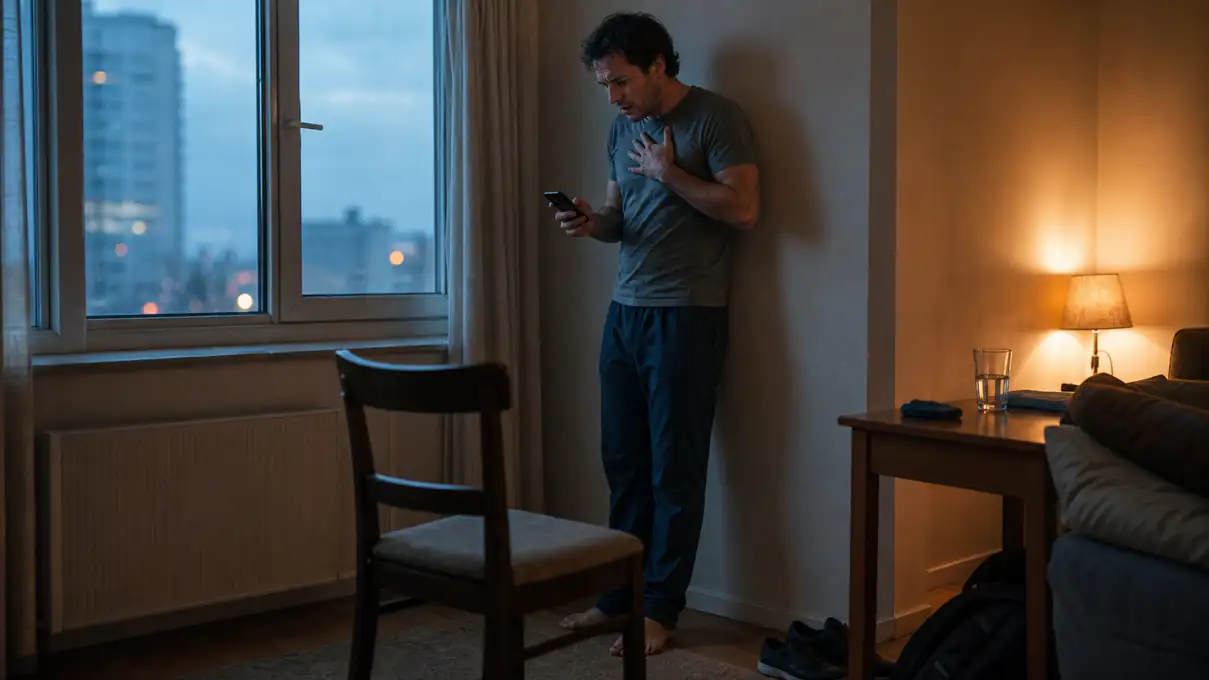
Sometimes craving arrives not as a thought, but as a physical wave. The body tightens, the mind searches for a route, hands move toward the phone, money feels already spent, an old contact appears too quickly. Inside, it says: “I cannot stand this.”
In those minutes, remember: craving is a state, not an order. It can be very strong, but it still needs a chain of actions. If you break even one link, the wave can pass without relapse.
If craving comes with heavy intoxication, confusion, hallucinations, seizures, breathing problems, chest pain, suicidal thoughts or self-harm risk, urgent help comes first. OpenHalt does not replace emergency services.
What happens at the peak of craving
At the peak, attention narrows. Everything that blocks using feels unimportant or irritating. Everything that leads to using feels logical, quick and almost inevitable.
NIDA describes addiction as a condition where brain circuits related to reward, stress and self-control change. Craving can therefore feel like strong body pressure. But that does not make a person weak, and it does not remove the possibility of placing a barrier.
The first 90 seconds
Do not try to convince yourself that you will never want to use again. At the peak, that task is too large. Do less:
- Stop physically: sit down, put the phone down, move away from the door or car.
- Name the state: “This is a craving wave.”
- Place one barrier: move the card away, close the app, step away from the substance, move toward people.
- Send a short message: “Craving hit hard. Stay with me.”
- Do not promise forever. Agree only not to act for the next 10 minutes.
The peak can return. Repeat the cycle instead of starting the argument with yourself from zero.
Increase distance
Craving becomes more dangerous when access is too close. If alcohol or the substance is nearby, if the app is open, if money is available, if the car is at the door, if the contact is already found, the brain needs less effort to move toward action.
Your task is to make using less convenient:
- leave the room where the substance is;
- move to a place where people are present;
- hand over money, keys or a card;
- delete or block the contact at least for the night;
- ask someone to reduce access.
Do not treat the wave with shame
After the first wave, a second one often arrives: shame about craving itself. “Here it is again”, “I am not normal”, “nothing works.” That shame can trigger another peak.
Craving does not erase recovery. It shows that support is needed right now. Recovery is not a life with no waves. It is the ability to meet the wave earlier than it becomes action.
If craving keeps coming back
Repeated waves should not only be endured, but also studied. Write down:
- what time craving hits;
- what happened in the hour before;
- which feeling was strongest;
- where access was;
- whom you messaged or did not message;
- what helped by even 5 percent.
You can bring these notes to a professional, group or psychologist-led room. They help build a plan, not an accusation.
What a loved one can do
If someone writes that craving hit hard, do not spend the first minutes proving that using is bad. At the peak, they often know that already. Help them through the nearest piece:
- stay in contact for 10 minutes;
- ask them to move to a place with people;
- help reduce access;
- do not shame them for craving itself;
- if danger signs are present, choose urgent help.
What a psychologist would say
Craving is frightening because it can feel like a “real desire.” In therapy, it is treated as a wave linked to triggers, stress, body state, familiar routes and the expectation of relief.
The work is not to forbid craving. The work is to increase the distance between craving and action: reduce access in advance, expand support, understand triggers and return to contact before relapse.
FAQ
What should I do when craving hits like a wave?
Stop physically, name the state, pause for 10 minutes, move away from access and message a person before acting. If there are danger signs or self-harm risk, urgent help comes first.
How long does strong craving last?
It can come in waves and return, but the peak does not always stay equally strong. The point is not to endure heroically, but to place barriers every time the wave rises.
If craving is strong, does that mean I already relapsed?
No. Craving is a state, relapse is an action. Between them are links: access, contact, route, purchase, decision. Those links can be broken.
Can I message OpenHalt right at the peak?
Yes, if there is no immediate threat to life. You can write: “Craving hit me hard.” With seizures, confusion, hallucinations, breathing problems, suicidal thoughts or a severe state, urgent help comes first.
OpenHalt
If at the peak of craving there is threat to life, heavy intoxication, seizures, confusion, hallucinations, breathing problems, suicidal thoughts or self-harm risk, urgent help comes first. OpenHalt does not replace emergency services.
If there is no immediate danger, you can write anonymously in OpenHalt: “Craving hit me hard. Help me get through 10 minutes.” In a psychologist-led room, you can go through the wave in contact, reduce the nearest access point and later unpack what triggered it.
In anonymous chats, you can write honestly about cravings, substance use, fear after using, and trying to stop without shame.
Open anonymous drug addiction chats
In OpenHalt rooms, psychologists and psychotherapists lead focused conversations, help make sense of patterns, and offer a safer next step.
Find specialist-led rooms on this topic
If you want one-to-one support, you can search for a specialist by topic, read their profile, and start with a clear first contact.
Read next
- Addiction recovery safety plan
- Addiction recovery: relapse, motivation and family support
- How to deal with anxiety
Sources
- NIDA: Drugs and the Brain – supports brain mechanisms of craving and self-control.
- NIDA: Treatment and Recovery – supports treatment, support and recovery framing.
- WHO/UNODC: International Standards for the Treatment of Drug Use Disorders – supports evidence-based care framing.
- NIAAA: Treatment for Alcohol Problems, Finding and Getting Help – supports help-seeking for alcohol problems.
- NIMH: Warning Signs of Suicide – supports crisis risk warnings.