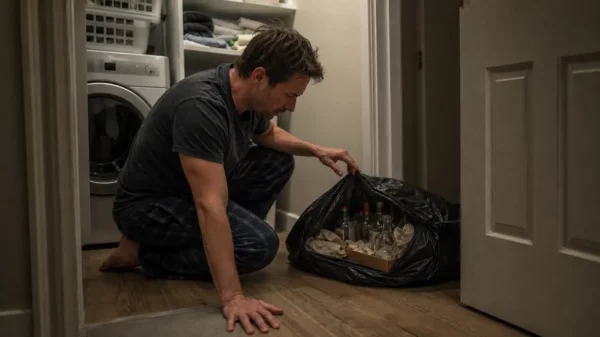


“I am in control” appears almost everywhere
When loved ones name a problem, when anxiety appears inside, when consequences are already repeating, the first answer is often: “I am in control.” It may sound firm, calm, irritated or even amused.
Sometimes a person really does have control. But sometimes “I am in control” appears exactly because seeing the opposite feels frightening. It protects against shame, pressure from others, the word addiction and the need to change something.
So the important thing is not an argument about who is right. The important thing is a check: is control a fact, or only a feeling?
Control needs to be measured by behavior
Control is not the same as confidence. A person can feel confident and still drink more, use, gamble, watch, shop or disappear into a behavior longer than planned.
NIAAA lists alcohol use disorder signs such as drinking more or longer than intended, unsuccessful efforts to cut down and continuing despite problems. NIDA describes addiction through compulsive repetition despite harm and changes in self-control.
Five checks for control
1. A limit before starting
Can you name a specific limit in advance and then keep it? Not “normally”, not “a little”, but exactly: how much, when, how long, where the stop point is.
2. A pause without bargaining
Can you take a pause for the chosen period without anger, hidden exceptions, bargaining and constant thoughts about returning?
3. Consequences without explanations
Can you honestly admit consequences without reducing everything to fatigue, other people, work, stress or “coincidence”?
4. Access
If you are in control, why is it so hard to remove access: bottles, contacts, app, money, websites, company, route?
5. The same script
If everything returns to the same circle after promises, that is data. Control should not keep losing to the same script.
Why the phrase does not work as proof
“I am in control” can calm you, but it does not change facts. It may reduce anxiety right now, but it does not answer: what happened last time, what changed, why access remained, why consequences repeat, why a pause feels threatening?
If control is there, checking it will not destroy it. If control is not there, checking may help you see it earlier.
What loved ones say and what you can take from it
Loved ones sometimes pressure, argue, accuse, monitor and make the conversation heavy. That can create resistance. But even if the form is poor, it may be worth checking the content: what exactly do they see?
If several people independently name the same pattern, it is not a diagnosis, but it is a reason to look at facts. Not so they win the argument, but for your own safety.
An honest experiment
For 14 or 30 days, try to:
- remove the easiest access in advance;
- tell one person about the pause;
- write down craving, irritation, thoughts and excuses;
- notice which situations you want to call exceptions;
- read the result as information, not as a debate.
If there is severe withdrawal, health risk, suicidal thoughts or prolonged heavy alcohol use, a pause experiment should be discussed with a doctor.
FAQ
Why do people with addiction often say “I am in control”?
Because the phrase reduces fear and shame, protects the self-image and helps delay an uncomfortable fact check.
How do I know whether control is real?
Look at behavior: can you keep a limit chosen in advance, take a pause, remove access and avoid repeating the same script after promises?
If I can stop sometimes, does that mean everything is fine?
Not necessarily. What matters is what happens in risky episodes, how often the line moves, what consequences exist and how much effort stopping takes.
What if the check shows loss of control?
You do not need to argue with yourself. It is better to discuss the facts with a professional, support group or anonymous chat and choose a safe plan for the next few days.
OpenHalt
OpenHalt can help you check “I am in control” without humiliation or pressure. You can write anonymously where you feel confident in control and where facts start disagreeing with that confidence. In chat or a psychologist-led room, you can look at limits, access, consequences and the next safe step.
If there is severe withdrawal, seizures, confusion, hallucinations, suicidal thoughts, self-harm risk or threat to life, urgent help comes first.
In anonymous chats, you can write to people with similar experience about cravings, relapse, shame, fear, and trying to start again.
Open anonymous addiction chats
In OpenHalt rooms, psychologists and psychotherapists lead focused conversations, help make sense of patterns, and offer a safer next step.
Find specialist-led rooms on this topic
If you want one-to-one support, you can search for a specialist by topic, read their profile, and start with a clear first contact.
Read next
- Alcohol addiction defense mechanisms
- Addiction recovery safety plan
- Addiction recovery: relapse, motivation and family support
Sources
- NIAAA: Alcohol Use Disorder, From Risk to Diagnosis to Recovery – supports AUD signs including loss of control, craving and attempts to cut down.
- NIDA: Drugs and the Brain – supports self-control, reward and compulsive repetition framing.
- NIDA: Treatment and Recovery – supports help and recovery framing.
- WHO/UNODC: International Standards for the Treatment of Drug Use Disorders – supports an evidence-based care approach.