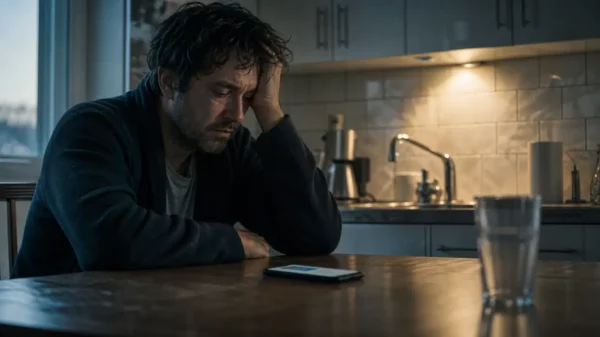

When someone truly wants to stop, but keeps coming back
In this OpenHalt conversation, Sergey talks with Yuri, a psychologist who works with people facing addiction. The topic is motivation for recovery. Not the Instagram version of motivation. Not “just want it badly enough.” Something much more honest.
Yuri talks about people who genuinely want to stop drinking or using. They are not pretending. In that moment, they believe themselves. Then time passes, a relapse happens, and the person is back in the same loop: using, recovering, promising, using again.
It is easy to call that weak willpower. Yuri frames it differently: addiction changes how the mind works. So the usual logic of “I’ll just forbid myself” often breaks down. Recovery needs more than a strong wish. It needs structure, support, and a clear answer to the question: what am I staying sober for?
The loop: using, recovering, promising
Many people know the cycle: a binge, a few days of trying to get back to normal, a painful promise that this was the last time, then another round.
The desire to quit can be real. But if nothing supports it after the first relief, that desire runs out of fuel.
Negative motivation: getting away from pain
Yuri separates motivation into two types. Negative motivation is the push away from consequences: debt, withdrawal, hangovers, shame, fights, fear, the damage addiction leaves behind.
It can be powerful at first. A person remembers the chaos and says, “I don’t want to go back there.”
When the pain starts to fade
The problem is that negative motivation depends on fresh pain. After a week or two, the body feels a little better. The sharpest consequences fade. Memory softens the damage.
Then comes the risky thought: if things are already okay, why keep doing all this recovery work?
Positive motivation: moving toward a life
Positive motivation answers a different question: what am I moving toward? A healthier family. A profession. Self-respect. A life where weekends are not spent destroying yourself and weekdays are not spent recovering.
It is not a fantasy. It is a direction.
“What is sobriety for?”
Yuri says he often asks people in recovery: if you want to stay sober, why? The answer may not come quickly. But without that question, sobriety can become nothing but running away from the past.
When there is a “why,” recovery starts to have a personal shape.
The comfort zone that does not feel good
There is a difficult middle place. The worst consequences have faded, but the new life has not formed yet. Sobriety may feel gray. Evenings may feel empty. The world moves on, and the person feels outside of it.
Old using patterns can start to look familiar, even safe. They are destructive, but at least they are known.
“I’ve been sober a week. Where is my new life?”
People often expect fast proof: I stopped using, so my business should improve, my partner should come back, my debts should disappear, everyone should trust me again.
Reality is slower. Sobriety does not fix everything automatically. It gives you space to start fixing things.
The escalator moving down
Yuri uses the image of an escalator. Recovery is like walking up an escalator that is moving down. If you stop taking steps, you do not stay in the same place. You slide back.
That is why recovery needs simple daily actions: a support group, a phone call, a written plan, a therapy appointment, an honest check-in, a conversation with someone who understands.
Realistic goals instead of dramatic promises
People in addiction often want to repay every debt, rebuild the family, become wildly successful, and prove everything at once. The longing makes sense. But an impossible goal can become another source of pressure.
Yuri suggests writing things down. Debts, goals, next steps, small wins. Paper makes the chaos visible.
Small steps build self-respect
A big goal can point the way. A small task helps you move today. That can mean making one call, attending one meeting, writing down one consequence you do not want to repeat, or tracking one thing you did right.
Progress needs to be seen. Otherwise the mind can erase it.
Why doing it alone is harder
The conversation keeps returning to one point: locking yourself away and trying to white-knuckle it rarely works. People need people. A support group. A therapist. A recovery community. Someone with lived experience.
Asking for help may feel humiliating at first. But once a problem is spoken out loud, support becomes possible. If no one knows what is happening, no one knows where to help.
What you can do
- Write down what you are trying to get away from.
- Write down what you want to move toward.
- Break one big goal into small tasks for this week.
- Track small wins, even if they feel unimpressive.
- Calculate the money, time, and energy that went into using.
- Find one person or group where you can be honest.
- Make a deal with yourself to try help before things get unbearable again.
FAQ
Why is wanting to quit not always enough?
Because wanting often depends on fresh pain. When the pain fades, motivation fades too. Recovery needs goals, support, structure, and daily action.
What is negative motivation in recovery?
It is the desire to get away from consequences: hangovers, withdrawal, debt, conflict, shame, fear, and the damage caused by addiction.
What is positive motivation?
It is movement toward a life you want to build: relationships, health, work, peace, self-respect, and a future that feels worth staying sober for.
Why can early sobriety feel empty?
Because the worst consequences may be fading, but the new life is not full yet. That middle period needs support, community, and small meaningful actions.
What helps prevent relapse?
Writing down goals and consequences, taking small steps, joining a support group, seeing a specialist, staying connected, and asking for help before a crisis.
OpenHalt
There can be a point in recovery when the consequences no longer feel close, but the life you hoped for still feels far away. That is often when staying alone with the urge becomes hardest.
OpenHalt has an anonymous chat for people trying to stop using, return after a relapse, or stay steady through an empty day. You do not need a perfect plan before you enter. You can begin with one honest message: “I do not want to go back today.” Join the recovery support chat