
The morning when your body turns anxiety all the way up
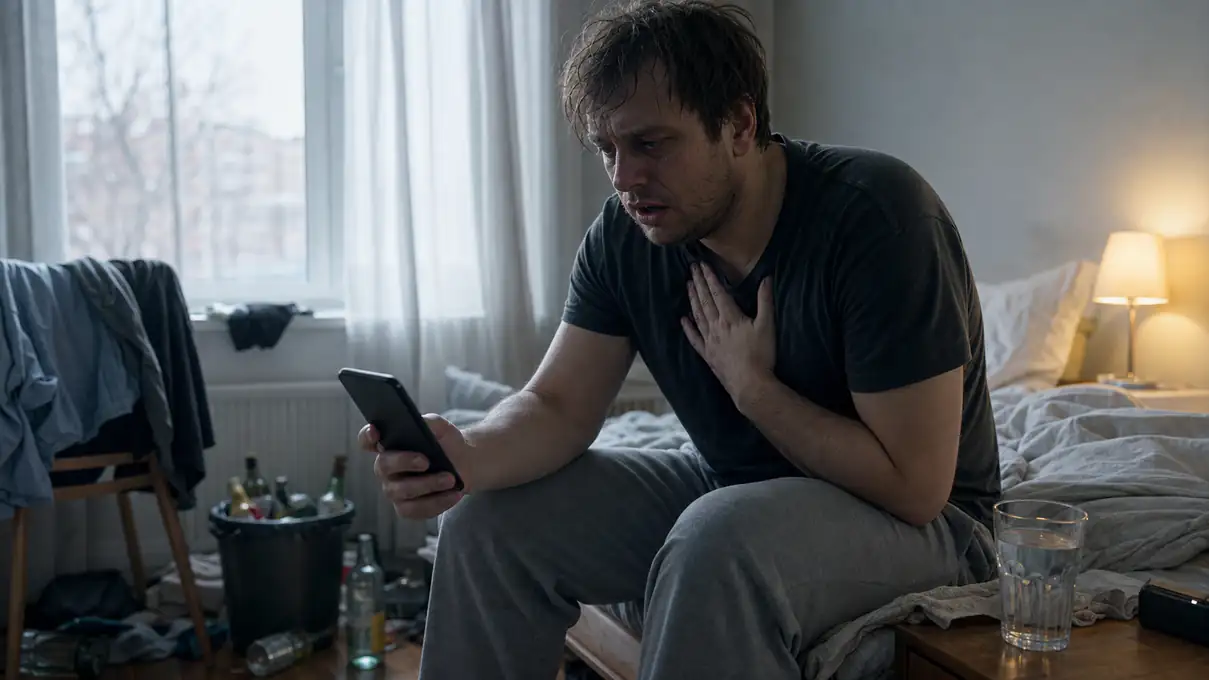
After alcohol, a person may wake up with more than a hangover. Sometimes panic hits hard: heart racing, hands shaking, air feeling thin, pressure in the chest, thoughts moving too fast. It can feel like a heart attack, death, losing your mind, or not surviving another minute.
Shame often arrives right behind it: what happened last night, who you messaged, what you said, how much you drank, why control disappeared again. The body feels scary, and the mind searches for catastrophe.
This article does not replace medical care. It helps with the first hours: what may be panic, what may be withdrawal or another risk, and why it is safer not to stay alone when the state feels frightening.
Rule out danger signs first
Panic can feel terrifying on its own. But after alcohol, do not automatically call every symptom “just nerves.” Seek urgent help if there is severe chest pain, severe trouble breathing, loss of consciousness, seizures, confusion, hallucinations, severe vomiting, signs of dehydration, very strong tremor, self-harm risk, or suicidal thoughts.
Be especially careful if drinking was prolonged, there was a binge, alcohol was mixed with medication or other substances, or there is a history of seizures, delirium tremens, or severe withdrawal.
If you are unsure, contact a doctor or urgent service. Shame should not make decisions for the body.
Why panic can happen after alcohol
Alcohol may feel calming at first, but afterward the nervous system can rebound in the opposite direction. Sleep is disrupted, the body may be dehydrated, the heartbeat may feel stronger, anxiety rises, and memories from the night before can give the mind more reasons to panic.
For some people, it looks like a panic attack: racing heart, sweating, shaking, chills, nausea, dizziness, shortness of breath, chest pain, fear of dying or losing control. NIMH describes these as possible panic symptoms, but after alcohol it is important to account for medical risk too.
The more often the pattern repeats – alcohol, morning anxiety, shame, and the urge to drink again – the more important it becomes to look at the full cycle, not just the panic.
What to do right now
- Check danger signs and do not stay alone if the state feels unsafe.
- Do not drive or make major decisions.
- Do not treat panic with more alcohol.
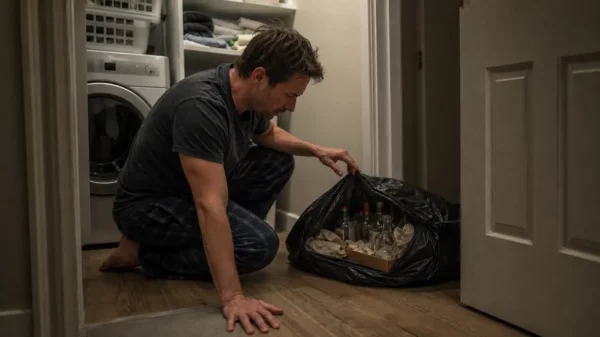
- Remove alcohol from access or ask someone else to remove it.
- Message one person: “I feel awful after alcohol, I am panicking, please stay in contact.”
- If symptoms get worse, choose medical help.
Panic often tries to convince you that you must act immediately. Sometimes the safest action is to slow down, avoid adding substances, and bring in another person.
What not to do
Do not diagnose every symptom online
The internet can turn anxiety into a long search for catastrophe. If symptoms may signal danger, get medical help. If there is no immediate danger, endless searching often feeds the panic.
Do not message everyone from shame
After alcohol, the urge to repair everything can be intense: apologies, explanations, deleted messages, big promises. Choose one safe person and talk only about the current state first.
Do not conclude that you are hopeless
Panic and shame after alcohol can sound like the truth. But this is a state, not the verdict on your life. Right now, safety matters more than self-judgment.
If panic after alcohol keeps repeating
Repetition matters. If alcohol is regularly followed by anxiety, memory gaps, shame, promises, and more drinking, the question is not only panic. Alcohol may be part of a cycle that is managing your emotions more than you want to admit.
Write down:
- When drinking usually begins.
- What tends to trigger it.
- How long the anxiety lasts afterward.
- What you do to numb it.
- Who you can message before the next episode, not only after it.
This is not self-diagnosis. It is material for a conversation with a clinician, peer group, psychologist-led room, or safe person.
What to say to someone close
Keep it short:
“I am panicking after alcohol. I cannot discuss everything right now. I need to check safety and not drink more. Please stay in contact. If symptoms become dangerous, help me contact medical care.”
If the person starts blaming you, repeat: “We can talk about consequences later. Right now I need safety.”
A psychologist’s view
Panic after alcohol often has two layers. One is the body: sleep, heartbeat, anxiety, withdrawal, hangover. The other is meaning: shame, fear of being exposed, feeling out of control, guilt toward loved ones.
If you only work with the morning panic and never look at the evening pattern, the cycle can repeat. In therapy, the work is not only “how to calm down in the morning,” but also what happens before alcohol, what alcohol is doing for the person, where support disappears, and how to put support in place earlier.
FAQ
Is panic after alcohol dangerous?
Panic can be extremely unpleasant, but it is not always dangerous. After alcohol, however, it is important to rule out medical risks: severe withdrawal, mixed substances, heart symptoms, seizures, confusion, hallucinations, self-harm, or suicidal thoughts.
Why is anxiety worse after alcohol?
Alcohol may reduce tension at first, then increase anxiety later, disturb sleep, affect heartbeat, and worsen memory-related fear. Shame and fear of consequences often arrive in the morning too.
Can I drink a little to make the panic stop?
That can pull the person into another round and strengthen the addictive pattern. If the body feels unsafe or symptoms are severe, do not add alcohol. Contact medical help or a safe person.
What if this happens every weekend?
Repetition is a signal. Look not only at morning panic, but at the drinking cycle: triggers, access, people, shame, promises, and support before the next episode.
Keep reading
OpenHalt
OpenHalt can be the first place you write the morning after alcohol, when anxiety and shame make it hard to talk to loved ones. In the chat, you can say anonymously: “I am panicking after alcohol, help me not to stay alone and not drink more.” In a psychologist-led room, you can later look at why the cycle repeats and what plan is needed before the next evening.
If there is chest pain, severe trouble breathing, seizures, confusion, hallucinations, self-harm, suicidal thoughts, or danger to life, seek urgent help first.
In anonymous chats, you can write when panic, anxiety, shame, or fear hits after alcohol.
Open anonymous chats about panic after alcohol
In OpenHalt rooms, psychologists and psychotherapists lead focused conversations, help make sense of patterns, and offer a safer next step.
Find specialist-led rooms on this topic
If you want one-to-one support, you can search for a specialist by topic, read their profile, and start with a clear first contact.
Sources
- NIMH: Panic Disorder, When Fear Overwhelms – supports the description of panic symptoms.
- NIAAA: Treatment for Alcohol Problems, Finding and Getting Help – supports alcohol problem signs and withdrawal symptoms.
- NCBI Bookshelf: Alcohol Withdrawal Syndrome – supports the risk framing for alcohol withdrawal.
- WHO: Alcohol fact sheet – supports the health harm framing of alcohol use.