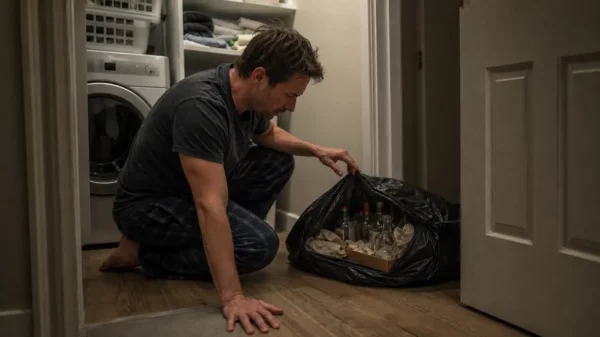

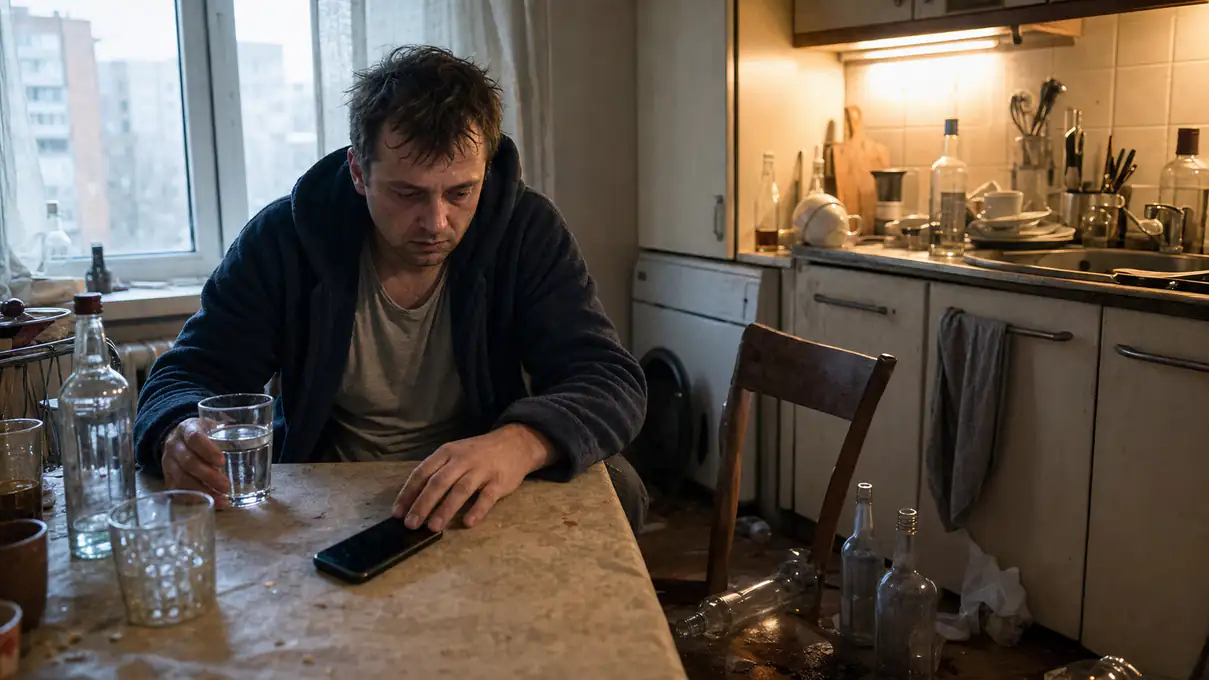
The first day after a binge rarely feels clean or brave
The morning after heavy drinking can begin with shaking, nausea, anxiety, shame, memory gaps, dread, and fear of looking at the phone. Some people immediately promise: “Never again.” Others think: “I cannot survive feeling like this.”
In the first 24 hours, the goal is not to become a perfect person. The goal is smaller: check safety, avoid continuing, do not stay alone, do not hide dangerous symptoms, and make one real contact with support.
This article is not medical advice and does not give a detox plan. After prolonged or heavy alcohol use, suddenly stopping can be dangerous for some people. If symptoms are worrying, medical assessment is safer than waiting in shame.
First, check for danger signs
Alcohol withdrawal can involve anxiety, tremor, insomnia, sweating, nausea, fast heartbeat, and the feeling that the body cannot settle. For some people it can become severe: seizures, confusion, hallucinations, extreme agitation, fever, severe tremor, loss of consciousness, injury risk, or suicidal thoughts.
If there are seizures, hallucinations, confusion, chest pain, loss of consciousness, severe vomiting, signs of dehydration, severe weakness, violence risk, self-harm, or suicidal thoughts, seek urgent help in your country. Do not stay alone and do not try to outlast it with willpower.
Be especially careful if you have had severe withdrawal before, seizures, delirium tremens, alcohol mixed with other substances, chronic illness, pregnancy, or a recent head injury.
What to do in the first hours if there is no immediate emergency
If there are no signs requiring emergency care right now, the first day still needs to be simple. The body and mind after a binge do not need pressure and drama.
- Do not drive or make major decisions.
- Remove alcohol from easy access, or ask someone else to do it.
- Do not stay alone if there is craving, panic, shame, or memory loss.
- Message one person: “I am after a binge. I feel bad. I need not to be alone.”
- If you are unsure about symptoms, contact a doctor, local health line, or urgent care service.
The first hours do not need heroics. Sometimes the strongest step is not proving control, but admitting: “I need support right now.”
What not to do after an alcohol binge
Do not start a marathon of dramatic promises
“Tomorrow I will become a completely different person” can bring a second of relief, but it often collapses under anxiety, body symptoms, and shame. Promise less: today I will not continue, today I will not be alone, today I will contact help.
Do not treat shame with more alcohol
After a binge, the thought may come: “If I drink a little, I will feel normal.” For some people that becomes the beginning of another round. If your body feels as if it needs alcohol, shaking or panic increases, or the state scares you, do not argue with yourself. Get medical advice.
Do not try to repair every relationship during withdrawal
After a binge, people may send long messages, apologize, threaten themselves, blame others, or promise too much. Those conversations matter, but in the first hours the topic is safety: where you are, whether you are alone, whether medical help is needed, and whether there is risk of drinking again.
A 24-hour mini-plan
Keep the plan short enough to fit on one phone screen:
- Check symptoms and decide whether urgent care is needed.
- Remove alcohol, money for alcohol, or easy delivery access.
- Tell one safe person.
- Decide where you will be this evening and overnight.
- Do not go to the place where the binge usually continues.
- Write three facts: when the binge started, what triggered it, what is most risky now.
- Choose the next support contact: doctor, therapist, group, chat, or specialist-led room.
If alcohol dependence is present, “sleeping it off” is often not enough. After the first day, the wider question is what happens before the binge, where support disappears, which triggers repeat, and what needs to be in place before the next crisis.
What to write to someone close
If calling feels too hard, write:
“I am after a binge. I feel awful and scared. I do not need blame right now. I need help not to continue and not to be alone. If I get worse or danger signs appear, please help me contact medical help.”
This does not erase responsibility. Later, there may need to be a conversation about consequences, boundaries, and treatment. But in the first hours, the task is to reduce danger.
If you are the loved one: help without rescuing
The first questions should be about safety, not morality:
- “Are you alone right now?”
- “Have you drunk today, or is there a risk you will continue?”
- “Are there tremors, hallucinations, confusion, seizures, chest pain, or thoughts of death?”
- “Do you need emergency care or a doctor?”
- “What can we remove from access right now?”
Helping does not mean buying alcohol, hiding consequences, paying debts, or dropping boundaries. But shouting in the first hours rarely makes the situation safer. First risk. Then conversation.
A psychologist’s view
An alcohol binge is often explored as a cycle, not as one “bad day.” Before it, there may be exhaustion, loneliness, conflict, anxiety, access to alcohol, celebration, anger, insomnia, shame, or the thought “I deserve to relax.” After it, shame and fear may push the person toward more drinking.
That is why the first day matters not only for the body. It is also a moment to avoid disappearing and start building a different plan: medical safety, support, boundaries, evening routines, a chat, a psychologist-led room, or individual care.
FAQ
Should I see a doctor after an alcohol binge?
If there are seizures, confusion, hallucinations, severe tremor, chest pain, loss of consciousness, severe vomiting, dehydration, self-harm, or suicidal thoughts, urgent medical help is needed. If you are unsure, get advice, especially after prolonged heavy drinking.
Can I just sleep it off?
Sleep can help some people recover, but it does not replace risk assessment. If symptoms are severe, getting worse, withdrawal is present, or there is risk of drinking again, do not stay alone and seek help.
What if I feel too ashamed to tell anyone?
Shame after a binge is understandable, but it often leads to hiding and another round. Message one safe person with facts: what happened, whether you are alone, whether there is risk of continuing, and whether medical help may be needed.
How can loved ones avoid slipping into control?
Check safety and symptoms first, then name boundaries. Control, interrogation, and threats can increase secrecy, but covering consequences also keeps the cycle going. The aim is support without rescuing.
OpenHalt
OpenHalt can be the first place you write after an alcohol binge, when speaking out loud feels shameful and being alone feels unsafe. In the chat, you can say anonymously: “I am after a binge, I feel bad, help me not to continue.” In a psychologist-led room, you can look more calmly at what led to the binge and what kind of plan you need next.
If there are seizures, hallucinations, confusion, severe withdrawal, self-harm risk, suicidal thoughts, or danger to life, seek urgent medical help first.
In anonymous chats, you can write about drinking, hangovers, cravings, shame after alcohol, and the first attempt to stop.
Open anonymous alcohol support chats
In OpenHalt rooms, psychologists and psychotherapists lead focused conversations, help make sense of patterns, and offer a safer next step.
Find specialist-led rooms on this topic
If you want one-to-one support, you can search for a specialist by topic, read their profile, and start with a clear first contact.
Keep reading
- Alcohol addiction defense mechanisms
- Addiction recovery safety plan
- Addiction recovery: relapse, motivation, and family support
Sources
- NIAAA: Treatment for Alcohol Problems, Finding and Getting Help – supports warning signs, withdrawal symptoms, and help-seeking for alcohol problems.
- NCBI Bookshelf: Alcohol Withdrawal Syndrome – supports the description of withdrawal symptoms and severe-risk states.
- WHO: Alcohol fact sheet – supports the health and social harm framing of alcohol use.
- UNODC / WHO: International Standards for the Treatment of Drug Use Disorders – supports an ethical and evidence-based framework for substance-use-related care.