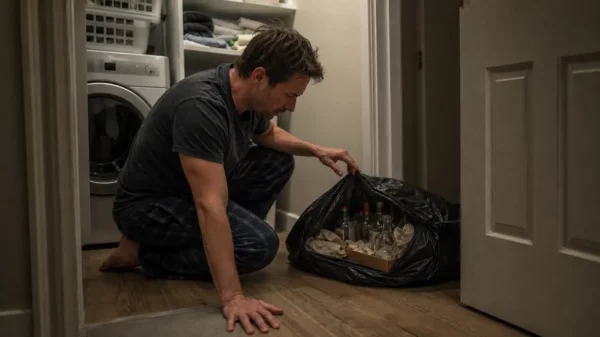


This is not the moment to destroy yourself with shame
If you are reading this right after drinking, using, gambling, self-harming, buying compulsively, or falling back into another behavior you were trying to stop, your mind may be loud. Shame. Fear. Anger. “Not again.” The urge to hide. Or the urge to confess everything and promise forever.
The first task is smaller than that. You do not have to solve your whole recovery tonight. You do not have to prove that this will never happen again. You do not have to punish yourself into becoming safer.
The first task is to reduce risk in the next few hours and not go through this alone. A relapse does not erase the days, weeks, or months that came before it. It means the plan needs help, adjustment, and people around it.
Check safety first
If there is overdose risk, loss of consciousness, chest pain, seizures, severe confusion, severe withdrawal, psychosis, violence risk, self-harm, or suicidal thoughts, do not wait to see whether it passes. Contact local emergency services, a medical professional, or the nearest crisis service.
OpenHalt is not a replacement for urgent medical care. A chat can be a first conversation, but it should not be the only support when someone may be in danger.
If there is no immediate life-threatening risk, it still matters not to isolate. After a relapse, the brain often offers two risky paths: continue because “it is already ruined,” or disappear because shame feels unbearable. Both can pull the person deeper.
What to do in the first 30 minutes
You do not need a perfect recovery plan right now. A few small steps can lower the chance of the relapse becoming a series.
- Do not drive or make high-risk decisions.
- Reduce the nearest access to the substance, betting app, money, contact, or place connected with the relapse.
- Message one safe person: “I relapsed. I do not need a lecture. I need not to be alone right now.”
- If your body is safe and there is no medical emergency, do something basic: water, food, shower, sleep, quiet, fewer screens.
- Do not promise “forever” tonight. Agree on the next 2-3 hours.
The key is to interrupt the automatic chain. Relapse often wants to become more relapse. Your job right now is not to win your whole life. It is to avoid the next episode.
What not to do right after a relapse
Do not turn shame into punishment
Shame can sound like honesty: “I am awful,” “I ruined everything,” “No one can trust me.” But when shame becomes the only voice in the room, it often leads to more relapse. The thought becomes: “If I am already this bad, what is the point?”
Do not put yourself on trial at night
At night, the brain is not good at telling reality from catastrophe. Big promises, breakup messages, threats, confessions, and life decisions are better left until your body is calmer and another sober person or professional can be involved.
Do not hide serious risk just to protect the image
You do not have to tell everyone. But if there is risk of continuing, overdose, withdrawal, self-harm, violence, or dangerous behavior, at least one safe person or professional needs to know what is happening.
One relapse does not mean you are back to zero
NIDA describes relapse during recovery as a sign that a person may need to resume treatment, modify the current plan, or try another form of support. That is different from “nothing worked.” It means the current plan may not be enough for the situation you are in now.
Relapse often starts before the action itself. It may begin with exhaustion, loneliness, conflict, money in easy reach, insomnia, withdrawal, anxiety, anger, a trigger, the thought “I am fine now,” or “just once.”
If you only look at the moment of use, betting, or behavior, you may get stuck in blame. If you look at the chain leading up to it, you get material for a stronger plan.
A 24-hour mini-plan
Keep the plan short. Not heroic. Write down:
- What happened, as facts, without insulting yourself.
- What happened in the 24 hours before: sleep, stress, people, money, place, emotions, access.
- Who you will message within the next hour.
- What you will remove from access today.
- Where you will be tonight so you are not alone with the risk.
- Who can help review the plan: clinician, therapist, peer group, specialist-led room, support chat.
If there is severe withdrawal, mixed substances, suicidal thoughts, psychosis, pregnancy, chronic pain, overdose, or dangerous symptoms, the first step is medical help.
What to write to someone close
If you cannot find the words, keep it simple:
“I relapsed. I feel ashamed, and I am scared I will hide or keep going. Please do not lecture me right now. I need someone to know and help me get through the next few hours. Tomorrow I can talk more.”
If the person you usually tell will panic or pressure you, choose someone else: a group member, clinician, friend, moderator, or anonymous chat. The goal is not a perfect reaction. The goal is not being alone with the impulse to continue.
If someone you love has relapsed
Do not begin with interrogation. In the first hours, the person may be ashamed, frightened, intoxicated, or physically unwell. Start with safety:
- “Are you somewhere safe right now?”
- “Is there a risk you will keep going?”
- “Do you need medical help?”
- “Who is with you?”
- “What can we remove from access today?”
Support does not mean covering consequences, giving money, dropping every boundary, or pretending nothing happened. It means helping reduce danger first and returning to an honest conversation later.
A psychologist’s view
In therapy, relapse is often explored as a chain, not as proof of weak character. What came before it? Where did support disappear? Which feeling became impossible to hold? Where was the plan too thin? Who needs to be nearby next time?
A useful relapse review does not search for a person to blame. It searches for points of intervention: earlier warning signs, medical needs, boundaries, peer support, a specialist-led room, or one-to-one care.
FAQ
Does relapse mean I am back to zero?
No. A relapse does not erase your recovery experience. It does show that the current plan needs review: more support, fewer triggers, treatment changes, or a clearer safety plan.
Do I have to tell everyone right away?
No. But if there is risk of continuing, harm, overdose, self-harm, or a severe state, at least one safe person or professional should know what is happening.
What if I want to keep going after the relapse?
Reduce access and do not stay alone. Message someone, move to a safer place, remove money, apps, substances, or contacts. If there is medical danger or risk to life, seek urgent help.
How should I talk to someone who relapsed?
Check safety first, then talk about facts and boundaries. Interrogation, shame, and threats can make the first hours more dangerous. This does not mean covering the relapse. It means not making the moment less safe.
OpenHalt
OpenHalt can be the first place you write after a relapse, when saying it out loud still feels unbearable. In the chat, you can say anonymously: “I relapsed, I am scared, and I need help not to continue.” In a psychologist-led room, you can look at the relapse chain more calmly and see where your plan needs support.
If there is overdose risk, severe withdrawal, psychosis, self-harm, suicidal thoughts, or danger to life, seek urgent help in your country first.
In anonymous chats, you can talk with people who also know cravings, relapse, early recovery days, and the slow return to stability.
In OpenHalt rooms, psychologists and psychotherapists lead focused conversations, help make sense of patterns, and offer a safer next step.
Find specialist-led rooms on this topic
If you want one-to-one support, you can search for a specialist by topic, read their profile, and start with a clear first contact.
Keep reading
- Addiction recovery safety plan
- Addiction recovery: relapse, motivation, and family support
- Addiction relapse abroad
Sources
- National Institute on Drug Abuse: Treatment and Recovery – supports the point that relapse may indicate a need to resume or modify treatment or try another approach.
- UNODC / WHO: International Standards for the Treatment of Drug Use Disorders – supports an ethical and evidence-based framework for care for drug use disorders.
- NIDA: Principles of Drug Addiction Treatment, Third Edition – supports the long-term nature of recovery and the need to adapt treatment to the person.
- WHO: Mental Health Gap Action Programme – supports routing care for mental, neurological, and substance use conditions.