
Introduction
Lera tells her story because she knows women who are still inside relationships like this. Women who say, “He can be normal. He does love me. He just has moments.”
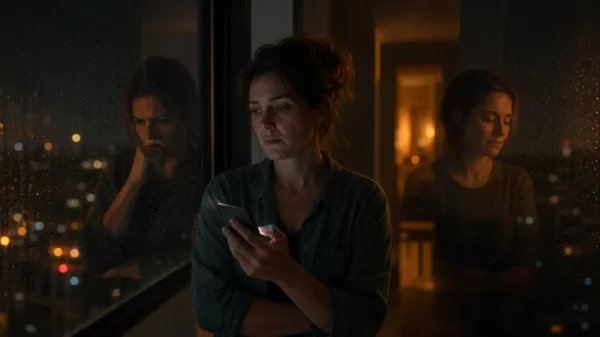
She knows that fog from the inside. In it, you can stop hearing your friends. You can hide bruises, explain away threats, blame substances, stress, childhood, illness. You can hold on to flowers and a few tender memories as if they erase everything that happens behind a closed door.
For almost five years, Lera lived in a relationship shaped by substances, depression, violence, children, fear of being alone, and a man she calls a psychopath. Today, she speaks about him without romance and without revenge. She speaks from a different place now: “I am at the center.”
When rescue feels like love
They met in 2018. Lera had moved with her daughters to her mother’s place. She was already dealing with substance use, and there was pressure around child welfare. She remembers sitting on a bench, crying, not knowing what to do.
He lived in the same building: her mother on the second floor, him on the fifth. He came over, listened, and offered to go with her and support her. Addiction was familiar territory to him. He had been in rehab as a teenager.
He was 18. She was 24. At first, she did not see him as a partner. But he helped with repairs, showed up, brought gifts, and courted her beautifully. Lera had two children, a mother with cancer, and a life where she was used to carrying everything herself. His intensity did not feel dangerous at first. It felt like relief.
She had heard bad things about him. Still, the thought came: “With me, he won’t be like that.”
Flowers after fear
The first red flags came early. Once, while he had been drinking, he raised his voice and insulted her. Lera ran home, deleted him everywhere, and cried. That same evening, he came with flowers and apologies.
Later, while sober, he snapped at her aggressively. She got scared, then explained it away: “Maybe he is just in a bad mood.”
Now she can see the cycle: fear, pain, apology, flowers, a brief warm stretch, then fear again. Back then, she liked how decisive he was. She had been strong for too long. When he said, “I decided. You are my woman now,” it did not sound controlling. It sounded like someone was finally taking over.
That is one reason abusive relationships can be so confusing. They do not always begin with obvious horror. Sometimes they begin with the feeling that someone finally sees how tired you are.
When a relationship starts acting like a drug
They began using together. First alcohol. Then pills that were in the house because Lera’s mother had cancer. In one room, her mother was lying sick. In another, Lera and her partner were fighting, making up, and using again.
In 2019, Lera’s mother died. A few days later, on Lera’s birthday, a friend came over to support her. Lera saw her partner kissing that friend in the kitchen. After that, the physical violence began.
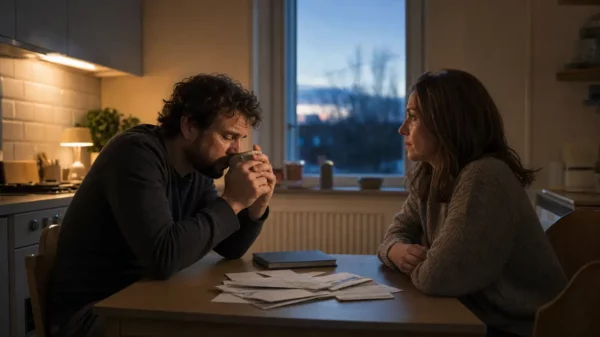
By then, Lera was already afraid to let him go. She says it plainly: she was not afraid for herself. She was afraid of losing him. Her mother was gone, she was alone with the children, and he had become the center of everything.
Friends, work, interests, and her sense of self slowly disappeared. In public, he could arrive with huge bouquets, and people envied her. Behind the door, there were affairs, disappearances, humiliation, and violence.
A year without substances, but not without addiction
At one point he gave her an ultimatum: if she kept using, they were done. Lera stayed clean for a year. She thought that if she had been the problem, things would finally get better.
They did not.
She remembers that year as gray and heavy. She stayed home, wanted nothing, went nowhere, and feared whether she had cooked and reheated the food correctly. She cried a lot and wrote in a journal.
At family gatherings, she could sit there broken while he told everyone, “She has PMS.” From the outside, everything looked fine. Inside, Lera kept feeling like something was wrong with her.
Later, she found the words for it: the relationship itself had become a drug. When she saw him, she shook. Her breath stopped. Her body reacted to him like a dose. Pain, sex, fear, hope, and reconciliation fused into one craving.
Violence she could no longer explain away
For a long time, Lera explained the violence through substances: he only hits me when he is using. Then one day he did it sober, and the old explanation fell apart.
There were broken cheekbones, a concussion, a hospital, and police. Lera said she did not know who had done it. Not because she was afraid for her own future. She was afraid of losing him.
There was an episode with a knife. The children were screaming. The next day, they made up again.
There was a missed miscarriage. Lera was taken to the hospital; he stayed with her daughters and stopped answering the phone. When she got home, he was using with a friend.
Whenever Lera was at her lowest, he left. After her mother’s death. After surgery. During problems with the children, school, and money. He could show up with flowers when it made him look good. He did not stay with her pain.
Rehab and the first honest words
When her children were removed, he left. Lera was alone and asked to go to rehab.
There, she talked less about substances and more about him. She was afraid to go home. She imagined him waiting there, ready to kill her.
Her story included humiliation, being spat on, alcohol poured over her head, videos posted online, threats. People told her what he was saying and doing. He told her it was not true. She believed him.
Today she says something hard: every day for five years, she had a choice, and every day she chose him. Back then, she was waiting for a miracle. She believed there was a human part in him she could save.
Even in recovery, the idea stayed with her: if she could stop using, maybe she could pull him out too.
What helped her leave
Therapy helped. Community helped. People who supported her without shaming her helped. It did not happen all at once. There were emotional setbacks, messages from him, shame, fear, and the thought, “What if?”
They still live in the same building: she is on the second floor, he is on the fifth. He still writes. Recently, he wrote that he loved her. When he left for Russia, Lera felt relief because she would not have to see him as often.
Now she can look at him without craving him. She feels sorry for him, but she does not want to go back. She does not hold on to anger either, because anger can keep a person tied too.
Lera learned to listen to her body. If “butterflies,” obsession, a rescue impulse, or a sudden pull show up around someone, she asks herself: is this love, or is this my trauma talking?
A psychologist’s perspective
Lera’s story shows several patterns that often keep people in destructive relationships.
The first is the fast start. When a relationship moves quickly, without boundaries or gradual trust, it can feel like fate, especially when someone is lonely, exhausted, or grieving.
The second is the cycle of abuse and repair. After fear come apologies, flowers, promises. The nervous system starts waiting for those short good moments as proof of love.
The third is fear of being alone. For Lera, loneliness felt more terrifying than violence. That does not mean she wanted to suffer. It means the bond had become a survival strategy.
The fourth is an old family script. If violence, substances, and endless forgiveness were normal in childhood, danger can feel familiar in adulthood.
The fifth is emotional addiction. When substances stop but the highs and lows of fear, jealousy, hope, sex, and reconciliation remain, the relationship itself can become the intensity a person craves.
What you can do
If you recognize yourself in this story, start with safety, not self-blame.
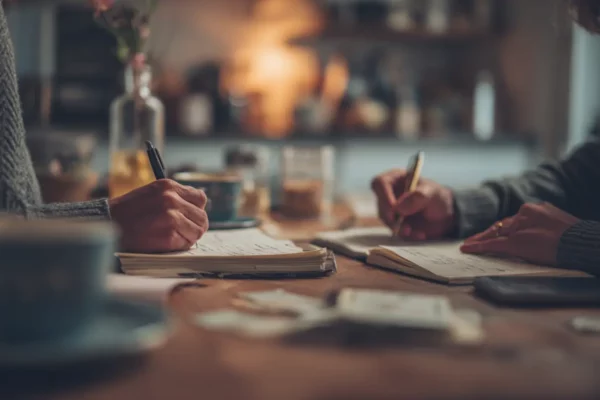
- Write down facts: what happened, when, who saw it, and what followed.
- Tell one safe person the truth without softening it.
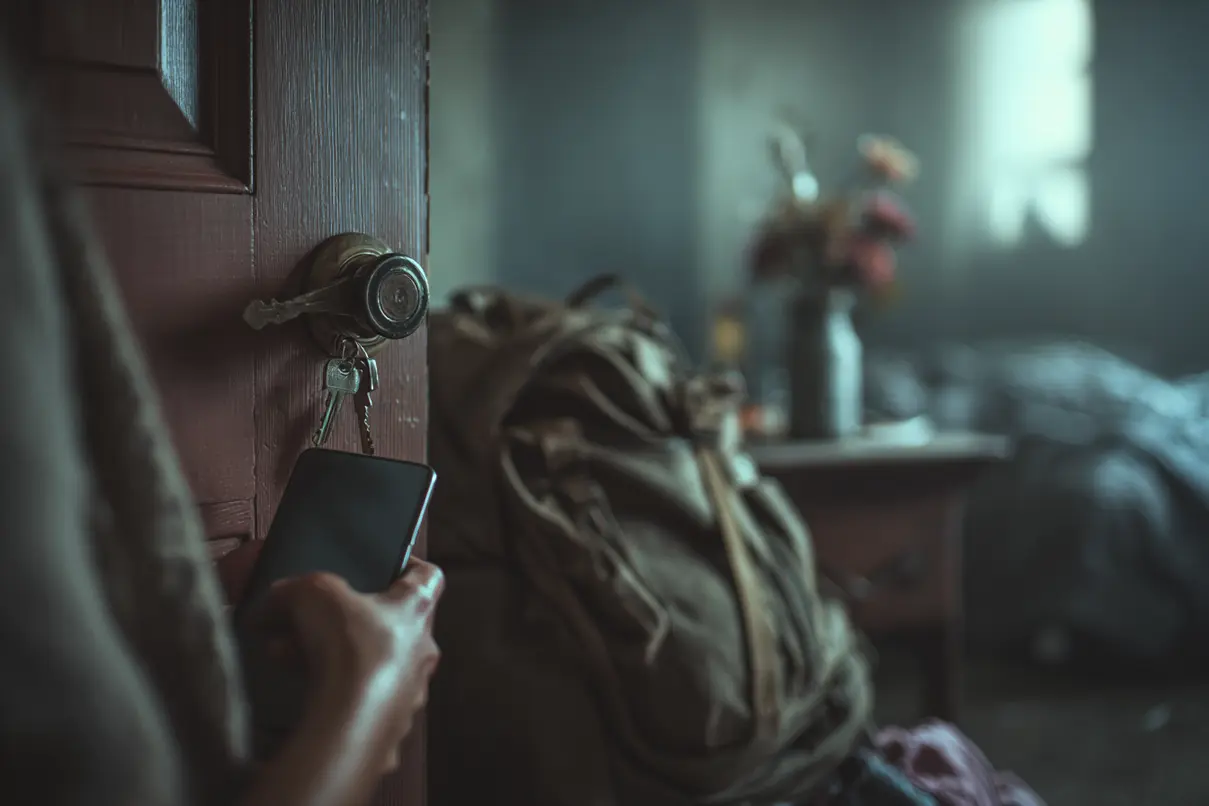
- If physical violence is a risk, prepare documents, money, a place to go, and emergency contacts.
- Do not confront a dangerous partner alone.
- Look for support outside the relationship: a therapist, a group, a hotline, a trusted person.
- If children are involved, safety matters more than the appearance of a complete family.
FAQ
Why is it so hard to leave an abusive relationship?
Because fear is only one part of it. Hope, shame, isolation, money, children, good memories, and trauma bonding can all make leaving feel impossible.
Is it love or codependency?
If you regularly feel scared, ashamed, hurt, and cut off from your own life, and if you keep hiding or excusing harm, the relationship is not emotionally safe.
Why do I still want to go back after leaving?
Your body and mind remember not only the pain, but also the brief moments of warmth, sex, apologies, attention, and promises. That pull can be part of a trauma bond.
Can I save an addicted partner?
You can support someone who chooses recovery and takes responsibility for their own work. You cannot recover for another person, and your safety cannot be the price of their change.
What if my partner is dangerous?
Avoid confronting them alone. Create a safety plan, reach out to trusted people or crisis services, and prepare practical steps before leaving if possible.
Takeaway
Lera’s story is not about weakness. It is about how pain can call itself love when someone has lived too long without feeling their own worth.
She did not leave because one day everything became simple. She left in small steps: rehab, community, therapy, honest conversations, people beside her. Instead of “there is only him,” she now has another sentence: “I am at the center.”
Keep reading
- Codependency: love that got sick
- Codependency, grooming, and emotional abuse
- How to leave codependency: first steps when life revolves around someone else
OpenHalt
OpenHalt talks about addiction, codependency, and abuse without shame or blame. If Lera’s story feels close to your own, you do not have to wait until everything falls apart. You can start with a safe conversation where you will not be rushed or judged.
If you are in immediate danger, put safety first and seek urgent help in your country.