When helping them stops helping you
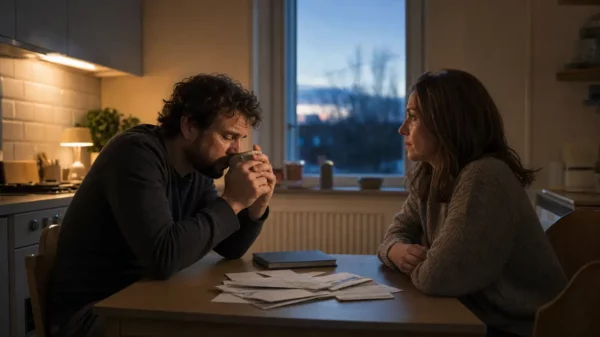
In this OpenHalt talk, Maksim Skripinsky speaks to the question that often comes after a personal story about codependency: what now? Someone recognizes themselves, cries, gets angry, maybe feels seen for the first time. Then morning comes, and the same apartment, the same phone, the same addicted loved one, the same urge to control are still there.
Maksim suggests thinking not in terms of one dramatic “exit,” but in terms of recovery from codependency. Like addiction, codependent behavior does not disappear because of one decision.
The first turn is painful: the family member needs help too. Not because they are bad. Because their life has already been swallowed by someone else’s drinking, using, chaos, rescuing, and control.
The search usually starts with them
Many people begin by searching “how to help an alcoholic” or “how to help an addict.” They want to save the person they love. Then they keep running into the same message: you need recovery too.
That can feel insulting at first. After all, they are the one drinking or using. But codependency means your life has also become unmanageable.
What codependency means here
Maksim uses Melody Beattie’s definition: a codependent person has let another person’s behavior affect them and has become obsessed with controlling that person’s behavior.
Three words matter here: let, control, obsessed. The point is not blame. The point is naming what has happened.
Low self-worth, control, and rescuing
Maksim names three core patterns: low self-esteem, compulsive control, and the need to rescue. From the outside, it can look like care. Inside, it becomes a life organized around someone else.
Checking, calling, covering, paying, threatening, backing down, fixing, hiding consequences. Every new crisis seems to prove that if you stop, everything will collapse.
Step one: admit you need help too
Maksim often hears, “I don’t have a problem. All my problems are because of him.” The pain behind that sentence is real. But the family system has already changed.
The relative is living in fear, sleeplessness, anger, shame, broken boundaries, and constant crisis management.
Powerlessness over another person’s behavior
In 12-step language, the first step is admitting powerlessness. For a family member, it may sound like this: I am powerless over another person’s behavior, and my life has become unmanageable.
This does not mean giving up. It means stopping the illusion that a little more control will finally fix everything.
Why “just step back” is not enough
Maksim tells a story about a mother of a person with addiction. He had told her she also needed help and should step back. After another relapse, she said, “I stepped back. So what?”
That sentence matters. Many relatives have tried stepping back. They stopped calling, stopped checking, stopped controlling for a while. Then anxiety pulled them back in.
Not just away from them, but back to yourself
If rescuing has become the meaning of your life, the empty space after control fills quickly with fear. So the question is not only how to step away from the addicted person. The question is where you go instead: to a group, a therapist, your own feelings, your own life.
Step two: find a mutual-help group
Maksim compares a codependent person to Atlas carrying everything on their shoulders. A group is a place where you can set the armor down for a little while.
You do not have to tell your whole story right away. You can come, listen, observe, and let the room become familiar.
Al-Anon, Nar-Anon, and people who understand
Al-Anon supports families and friends of people with alcoholism. Nar-Anon supports families and friends of people with drug addiction. Other groups, including CoDA and Adult Children of Alcoholics, may also help.
The goal is not to learn how to control the addicted person better. The goal is to recover your own life.
Step three: first things first
Maksim highlights a 12-step slogan: first things first. For a person with addiction, the first thing is recovery. For a codependent person, the first thing is also recovery: your own.
Not proving, chasing, fixing, forcing treatment, or rebuilding someone else’s life. Your program of action comes first.
Put the oxygen mask on yourself
The airplane image is simple: adults put on their own oxygen mask first, then help the child. For codependent thinking, that can feel wrong. The old pattern says: rescue everyone else, then maybe think about yourself.
But if your whole life is postponed, anger and exhaustion keep building. Self-care is not selfish here. It is survival.
Boundaries and responsibility
Codependency damages boundaries. A family member may start feeling responsible for treatment, sobriety, debts, work, mood, consequences, and the future of the addicted person.
The grounding question is: what am I actually responsible for? Your safety. Your actions. Your words. Your support system. Your boundaries.
Treatment belongs to the addicted person and to professionals when that person is willing to accept help.
Therapy and action
Maksim encourages therapy, ideally with someone who understands addiction, family systems, and does not dismiss 12-step recovery.
Recovery from codependency is not a thinking program for “someday.” It is an action program: find a meeting, attend, listen, write down one boundary, ask for support, call a therapist, take one small step.
What you can do
- Admit that your life has also become unmanageable around someone else’s addiction.
- Find one group: Al-Anon, Nar-Anon, CoDA, Adult Children of Alcoholics, or a local family support group.
- Give yourself several meetings before deciding.
- Write down three ways you control or rescue.
- Choose one boundary you can actually follow through on this week.
- Find a therapist familiar with addiction and family systems.
- If home is unsafe, create a safety plan and seek urgent help.
FAQ
How do I know if I am codependent?
If your life revolves around controlling, rescuing, fearing, or managing another person’s addiction while your own needs disappear, it is a sign to seek support.
Why is stepping back not enough?
Because control may have become a whole way of life. You need somewhere to turn: support groups, therapy, people, and practical steps back to yourself.
What groups help families of addicted people?
Al-Anon, Nar-Anon, CoDA, Adult Children of Alcoholics, and local family support groups can all be options.
What does admitting powerlessness mean?
It means admitting you do not control another person’s using, treatment, or choices, while reclaiming responsibility for your own actions and boundaries.
Where do I start if I have no energy?
Start small: find a meeting time, text a therapist, save a crisis number, write down one boundary, or tell one safe person what is happening.
OpenHalt
It is possible to spend years watching someone else’s drinking or using and forget what your own day feels like. If you are exhausted by checking, covering up, waiting for the next crisis or trying to hold everything together, you can come to an anonymous chat for families and loved ones.
You do not need a perfect explanation. You can begin with: “I love this person, but I am losing myself.”
Join the chat for families and loved ones