“I cried all the time”
In this OpenHalt conversation, Maksim speaks with Inna about codependency and becoming a “new me.” She does not show her face, but her voice carries the weight of many years: exhaustion, faith, grief, humor, and a kind of tenderness that survived.
Inna says she is recovering from the family disease of alcoholism. She attends Al-Anon groups for families and friends of people with alcoholism. She first came to the program many years ago in terrible shape. Her husband was drinking. Her children had their own struggles. She was trying to save everyone until there was almost nothing left of her.
A room where crying was allowed
At first, Inna traveled to meetings in Zhirovichi. There was a church, a group, and people coming from different places. Later she learned there was an Al-Anon group in her own city.
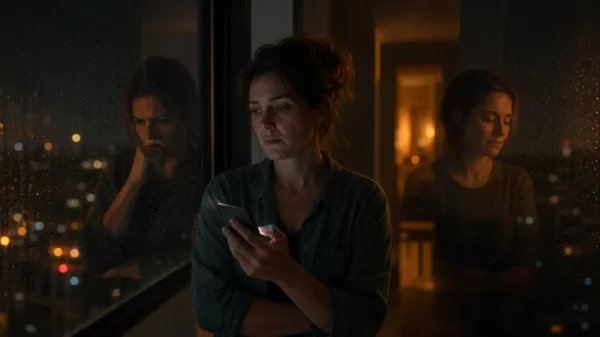
She sat there and cried. For months. The women told her, “Cry. We cried too.” For someone who had spent years holding a collapsing home together, that permission mattered.
Rescue that looked like love
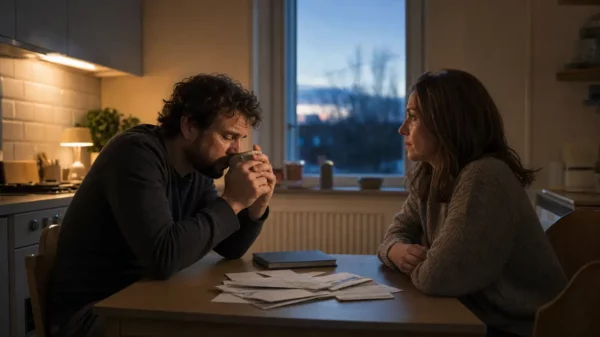
Inna remembers neighbors knocking on the door to say her husband was lying in the stairwell. She would grab the children and say, “Come on, we have to pull Dad upstairs.” The children saw the drinking, the yelling, the panic, the mother who kept dragging everyone back inside.
Later she realized she was rescuing the children in the same way. She found schools, jobs, solutions. She even wrote school assignments for one of her sons at night and walked across town to hand them in because she had no money for transportation.
At the time it felt like motherhood. Looking back, she calls it madness.
When the body cannot carry it anymore
Inna was a young woman in a new city, with two small children and a husband who drank. There were gardens, heavy bags of potatoes and cucumbers, late-night canning, trains, stairs, fights, and the endless feeling that she had to carry everything.
She carried him physically. She carried the household. She carried shame and fear. Her body eventually paid for it.
The seventh floor
One memory is especially painful. A small apartment on the seventh floor. The children asleep. Inna opening the window, already at the edge.
Then one child wakes up and asks, “Mom, where are you going?” Inna says that may be why she is alive.
The fear of losing her children
Inna was terrified of being alone. Her husband was there physically, but not as a partner in her life. The children became her anchor, her purpose, and also the place where her fear turned into control.
She walked them to school, kept them from trips, looked for their jobs, tried to manage their lives. Today she says, “I exhausted them with my love.”
A mother’s guilt
Inna wonders whether she caused her children’s struggles by teaching them to rescue their father. Maksim gently stops her: she may have been part of the environment, but it is not all her fault.
That distinction matters. A parent can acknowledge harm, ask honest questions, and still not turn their children’s whole lives into a sentence against themselves.
Al-Anon and boundaries
Al-Anon helped Inna learn something very practical: if you say you will do something, do it. If you cannot do it, do not threaten it.
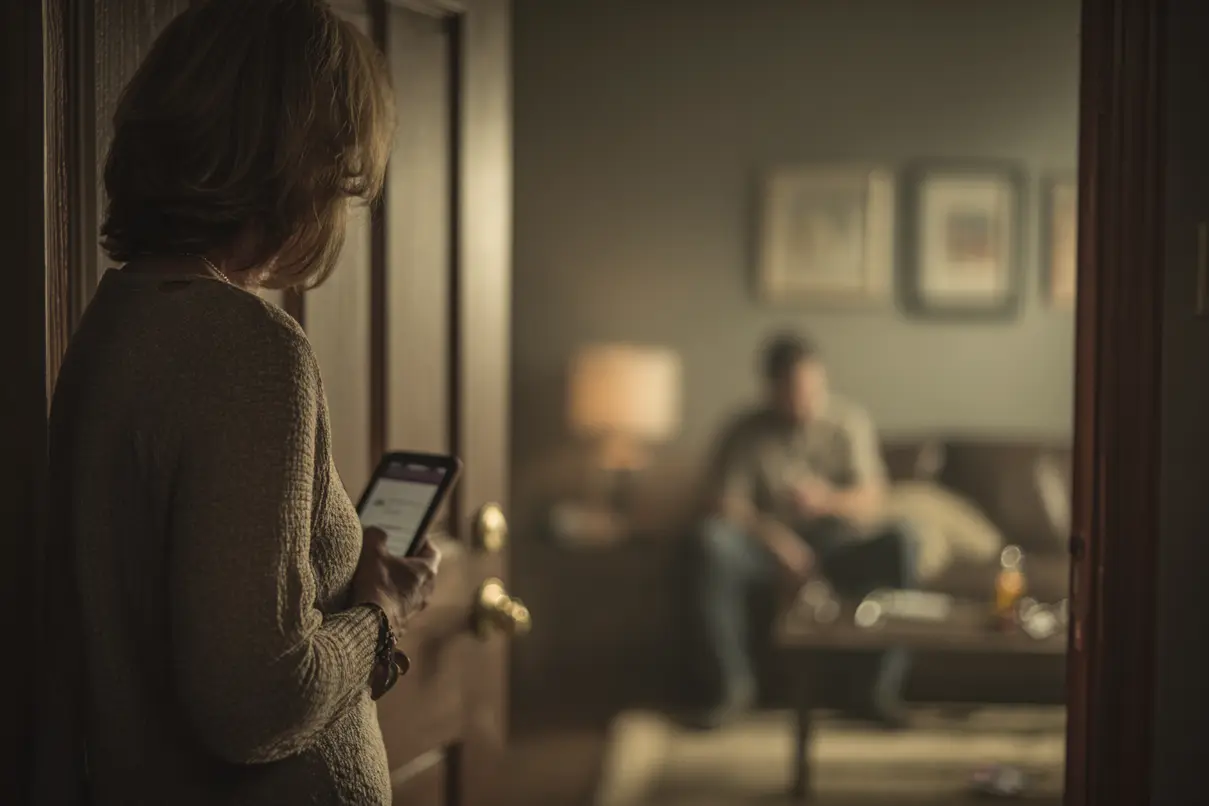
One evening, a loud group was in her apartment and the computer was humming. She called an Al-Anon friend and asked what to do. The answer was simple: stop only promising. Inna walked into the room and said that by 10 p.m. her apartment had to be quiet. Then she left and prayed. When she came back, everyone was gone.
Safety instead of endless tolerance
With her husband, she also changed. When something becomes dangerous or unacceptable, she no longer spends hours warning him. She calls for help. She says, “I don’t let myself be hurt.”
There is no hatred in that. There is a boundary.
Faith as support
For Inna, the Higher Power is God. She attends an Orthodox church, prays, reads the Gospel and the Psalms. That is her way of staying whole when the house becomes unpredictable again.
She describes an Al-Anon reading where a woman imagines placing loved ones in God’s care. Inna adapted it: she pictured wrapping each son in a blanket and giving them into God’s hands. It helped her release control. Not because she loved them less, but because she could no longer be God for everyone.
The first trip
The turning point is almost cinematic. Inna is invited on a pilgrimage. Her bags are packed, but fear rises again: how can I leave the house, the children, the husband, the apartment?
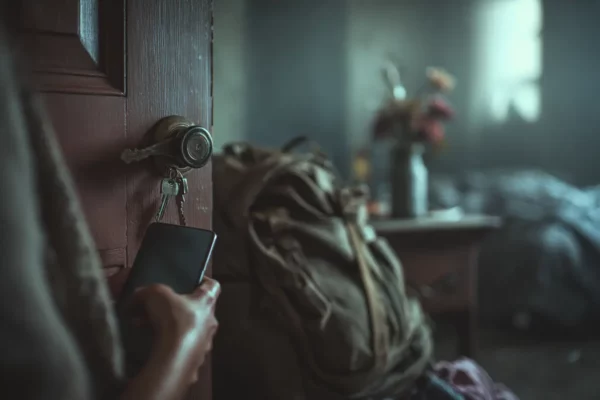
She prays, stands up, walks into the children’s room and says, “Help me carry my bags. The taxi is coming.” The children are stunned. Their always-present mother is leaving for a few days.
When she came back and saw that the world had not collapsed, something opened. She began organizing trips, traveling through Belarus and abroad, and finally visited Kyiv, a city she had dreamed of for years.
“I am not afraid of being alone anymore”
By the end of the conversation, Inna says the old fear of loneliness is gone. She can go to a lake after work, sit with tea, walk, rest, and enjoy being alive.
She also notices care from her adult children now. They check on her health. They send warmth. The relationship is not perfect, but it is no longer built only on panic.
What you can do
- Look for a support group for families of people with addiction: Al-Anon, Nar-Anon, Adult Children of Alcoholics, or a local family support group.
- Give yourself several meetings, not just one.
- Write down where helping turns into rescuing.
- Choose one boundary you can actually follow through on.
- Make a safety plan if there is aggression, fire risk, threats, or violence at home.
- Talk to a professional if you have thoughts of self-harm, severe anxiety, or exhaustion.
- Do one thing each day that brings you back to your own life.
FAQ
What is codependency in simple terms?
It is when your life starts revolving around someone else’s addiction through control, rescuing, fear, guilt, and trying to hold together what one person cannot hold together alone.
What is the difference between helping and rescuing?
Helping respects the other person’s responsibility and does not destroy the helper. Rescuing often means doing for someone what they need to do for themselves.
What is Al-Anon?
Al-Anon is a fellowship for families and friends of people with alcoholism, built around shared experience, support, and recovery.
How do you start setting boundaries?
Start with one boundary you can actually keep. A boundary works when it is followed through, not when it sounds dramatic.
What if home is unsafe?
If there is violence, threats, fire risk, aggression, or self-harm risk, seek immediate help and create a safety plan with people and services you can contact.
OpenHalt
For a long time, rescuing someone can feel like love. You make the calls, cover the damage, calm the children, carry the fear and tell yourself that everything will fall apart if you stop. Then one day you notice that your own life has been waiting quietly in the background.
OpenHalt has an anonymous chat for people living close to someone else’s addiction. You can write about exhaustion, guilt, fear, boundaries or the first small thing you want to do for yourself. You do not need to make a final decision today. You can begin with one honest sentence: “I cannot keep rescuing everyone at the cost of myself.” Join the chat for families and loved ones
Important: If you are thinking about harming yourself, or if there is immediate danger from violence, fire or aggression at home, seek emergency help in your country now and contact someone who can stay with you or help you get to safety.