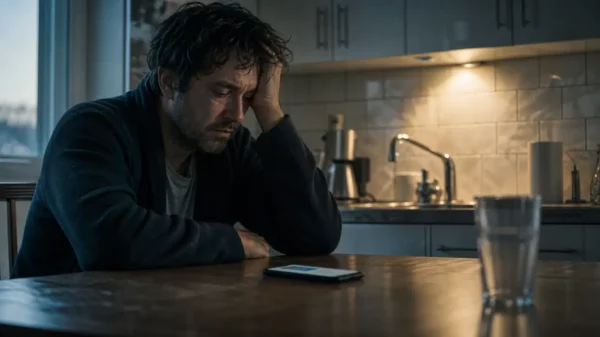


When someone says, “I know better, but I still do it”
One of the hardest parts of addiction is that awareness does not always stop the cycle. A person can remember the damage. They can know what happened last time. They can hate the secrecy, the arguments, the money lost, the shame after using, drinking, gambling, scrolling, buying, or going back to the same behavior.
And still, at the wrong hour, the pull returns.
From the outside, that can look like stubbornness. From the inside, it can feel like a gap between “I do not want this” and “I am already doing it.” The decision made in the morning does not always survive the evening: loneliness, anger, exhaustion, body tension, a familiar route, one notification, one memory of relief.
Addiction mechanisms give language to that gap without turning it into an excuse. Addiction involves reward, learning, stress, memory, attention, and control. The problem is not that the person is broken. The problem is that the brain has learned to reach for fast relief even when the cost has become too high.
This article is educational and does not replace care from a doctor, therapist, or psychiatrist. If there is risk of overdose, severe withdrawal, psychosis, loss of consciousness, violence, suicidal thoughts, self-harm, or dangerous behavior, seek urgent local medical or crisis help.
Reward: why the brain remembers relief
Addiction rarely begins with a plan to lose control. In the beginning, there is usually an effect: relief, brightness, confidence, sleep, numbness, courage, quiet, escape. The brain does not file that moment under “bad choice.” It files it under “this changed how I felt.”
Research on addiction often discusses reward and anti-reward systems. In plain language, the cycle can shift from chasing pleasure to escaping distress. The person is no longer thinking, “I want to feel amazing.” They may be thinking, “I cannot stand how I feel right now.”
That is why advice like “just find a healthier hobby” often misses the point. In addiction, the behavior is doing a job. It may be calming fear, covering shame, creating a sense of control, softening grief, or making the night survivable.
Triggers and memory: why craving can feel sudden
Craving does not always arrive as a clear thought. It can be triggered by a place, a smell, a song, payday, stress after work, an empty apartment, a fight, a phone contact, a website, a casino ad, or the feeling of being left alone with yourself.
The brain learns associations. Context and relief become linked. Later, the link can fire faster than reflection. A person may still be telling themselves “I’m fine” while the body is already tense, attention has narrowed, and the old script is warming up.
The goal is not to eliminate every trigger in the world. The goal is to know your own pattern well enough to interrupt it. When does the pull usually start? After which conversations? At what time of day? On top of which feeling: shame, boredom, anger, fear, emptiness, guilt?
Craving thrives on speed
The shorter the distance between impulse and action, the stronger the loop becomes. Recovery often depends on small practical barriers: removing quick access, not keeping substances at home, blocking risky apps, changing a route, avoiding isolated high-risk hours, or telling one trusted person before the craving peaks.
That is not weakness. It is design. You are making the dangerous choice slower.
Control: why “I’ll handle it alone” can stop working
Addiction affects more than desire. It can affect the ability to pause, switch attention, remember consequences in the heat of craving, tolerate discomfort, and stop an action that has already started. Studies of cognitive control and neuroimaging link addiction with attention, inhibition, decision-making, and compulsive patterns.
In real life, this can look ordinary and brutal. Someone promises not to text an old contact, then does it. They promise not to open the betting site, then “just check.” They promise one drink and lose the night. They promise not to buy and hide the bags again.
Afterward comes the old verdict: “If I did it again, I must be hopeless.” But shame rarely improves control. More often, it isolates the person, and isolation becomes fuel for the next round.
Stress: when the behavior no longer feels good
One of the cruel shifts in addiction is that the behavior may stop feeling pleasurable, but stopping feels unbearable. The person continues not because it feels good, but because without it they feel anxious, empty, restless, sleepless, irritable, or physically unwell.
That creates a trap. The behavior briefly reduces distress, then creates consequences that increase distress. The next craving begins from a more exhausted place.
Real help has to address the stress system, not only the behavior. That may include sleep, anxiety, depression, trauma, physical withdrawal, medication when indicated, therapy, peer support, family boundaries, and a plan for dangerous moments.
Why treatment is more than one piece of advice
If addiction involves reward, learning, stress, and control, help has to be more than a slogan. NIDA, WHO, UNODC, and APA materials describe addiction care as individualized and often multi-component: medical assessment, therapy, medications when appropriate, support for co-occurring mental health conditions, family work, peer groups, and continuing care.
That does not mean everyone needs the same path. One person may need medical help first because withdrawal is risky. Another may need a support group. Another may need therapy for shame and trauma. Another may need a loved one to stop policing and start setting calm, firm boundaries.
The point is not to wait until life is completely destroyed. Addiction often tells people that help is only for “worse cases.” That is stigma talking.
What you can do in the next 24 hours
Map the loop in one sentence
Use a simple chain: trigger, feeling, thought, action, consequence. For example: “Fight with my partner, shame and anger, I don’t matter, I use, panic and secrecy.”
Remove one fast entrance
Do not redesign your whole life tonight. Remove one easy path into the cycle: an app, a contact, cash access, a route, a stash, a bottle at home, a gambling site, a private late-night window.
Send one honest message
Keep it short: “I’m craving. Can you stay with me for 15 minutes?” You do not need a perfect explanation. You need time, contact, and less secrecy.
Check medical risk
Alcohol, benzodiazepines, opioids, stimulants, mixed substances, pregnancy, psychosis, suicidal thoughts, and severe withdrawal need medical assessment. Do not try to manage high-risk withdrawal or overdose danger alone.
A psychologist’s view
Psychologically, addiction often survives on two promises: “this will help right now” and “no one has to know.” The first promise brings short relief. The second cuts the person off from support.
Recovery usually begins before motivation feels clean or heroic. It begins when one real person is allowed to know the truth. Not everyone. Not the whole world. One safe person, one clinician, one group, one honest message. At that point addiction is no longer the only place the pain can go.
FAQ
Why does craving come back after someone decides to stop?
Because addiction is not only a conscious decision. Craving can be triggered by stress, memory, body state, familiar context, and fast automatic reactions.
Does this mean the person is not responsible?
No. Addiction mechanisms do not erase responsibility. They help build a realistic plan with less shame, more protection, treatment, support, and limits around access to risk.
Can the brain recover after addiction?
The brain can change, but not through one promise. Repeated safe choices, treatment for co-occurring conditions, support, self-regulation skills, and time all matter.
When is urgent help needed?
Urgent help is needed for overdose, severe withdrawal, loss of consciousness, psychosis, threats of violence, suicidal thoughts, self-harm, or dangerous behavior.
OpenHalt
OpenHalt is for people who know the gap between “I do not want this” and “I am already doing it.” If you recognize your loop, you do not have to bargain with craving alone.
You can start small: name what triggered it, ask for contact, and slow the next few minutes down.
If there is overdose risk, severe withdrawal, self-harm, suicidal thoughts, or loss of control, seek urgent help in your country.
Join the chat “When craving hits”
Keep reading
- How addiction changes the brain and body
- Addiction recovery safety plan
- Motivation for recovery and the comfort zone of addiction
Sources
- Koob & Volkow. Addiction and brain reward and antireward pathways – CNS Spectrums, 2010; DOI: 10.1159/000324065; PMID: 21508625; supports the reward, stress, and anti-reward framing.
- Kalivas & Volkow. The neural basis of addiction: a pathology of motivation and choice – American Journal of Psychiatry, 2005; DOI: 10.1176/appi.ajp.162.8.1403; PMID: 16055761; supports the motivation, choice, and control framing.
- León Méndez et al. Effects of internet and smartphone addiction on cognitive control – Neuroscience and Biobehavioral Reviews, 2024; DOI: 10.1016/j.neubiorev.2024.105572; PMID: 38320657; supports careful discussion of cognitive control in behavioral addiction research.
- The resting-state brain activity signatures for addictive disorders – The Innovation Medicine, 2024; DOI: 10.1016/j.medj.2024.01.008; PMID: 38359839; supports the existence of neural correlates across addictive disorders.
- NIDA. Principles of Drug Addiction Treatment: A Research-Based Guide – 2018; supports individualized, multi-component treatment principles.
- American Psychiatric Association. What Is a Substance Use Disorder? – official APA clinical information; supports patient-facing SUD language and care options.
- WHO / UNODC. International Standards for the Treatment of Drug Use Disorders – 2020; supports ethical, continuous, evidence-informed care standards.