
When fear arrives after using
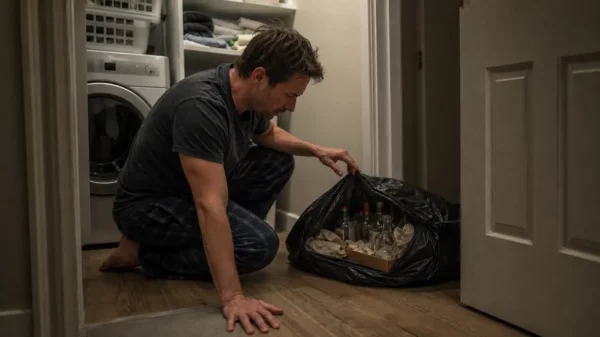
Sometimes fear comes after the action has already happened. Alcohol, drugs, gambling, a night relapse, mixing substances, a higher dose, losing control. The body has not settled yet, and the mind starts racing: “What did I do?”, “Am I going to die?”, “Am I losing my mind?”, “If anyone finds out, everything is over.”
In that moment, do not argue with yourself about whether you deserve help. Help is not only for people who handled everything well. Help is for moments with risk, fear, and isolation.
This article does not diagnose or replace a doctor. It is a first-hours guide: check danger signs, avoid hiding, avoid using more, and make one safer contact.
Check danger signs first
If there is loss of consciousness, seizures, chest pain, severe trouble breathing, blue lips, confusion, hallucinations, severe aggression, overdose risk, mixed substances, self-harm, or suicidal thoughts, seek urgent help. Contact local emergency services, a medical professional, or the nearest crisis service.
Do not try to wait it out if the body feels unsafe. This matters especially if you are not sure what you used, how much, what it was mixed with, or whether a sober person is nearby.
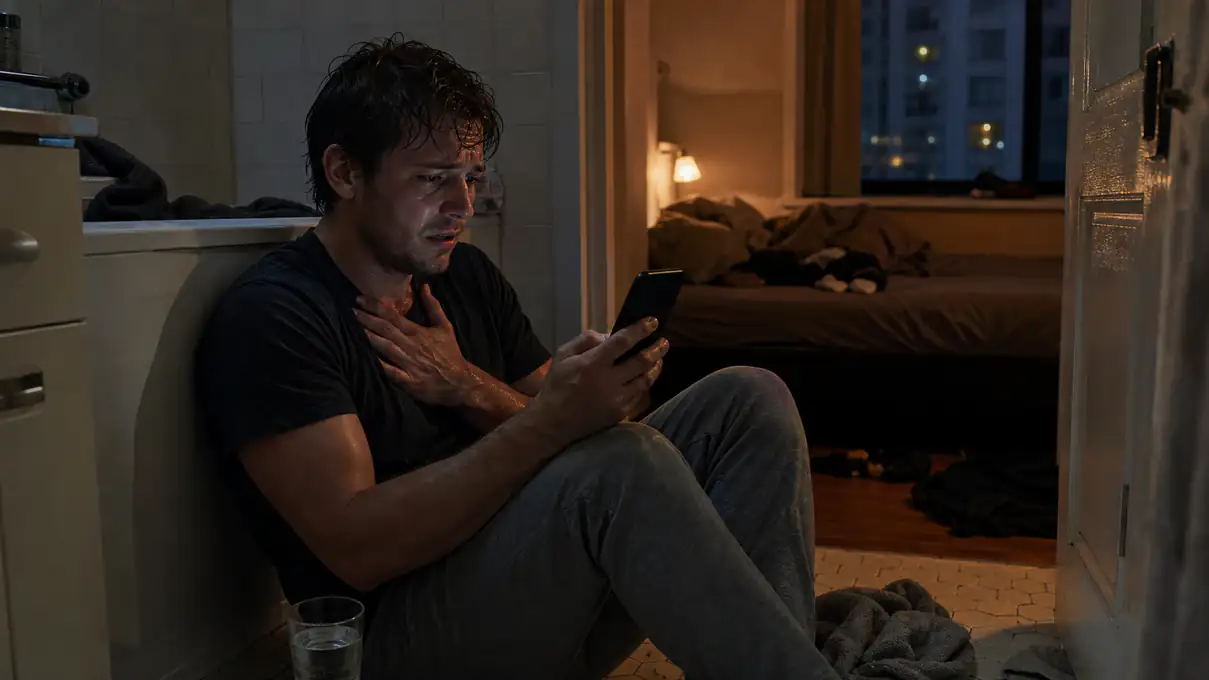
If there is no immediate danger, fear can still be intense. Panic can bring a racing heart, shaking, sweating, chills, shortness of breath, nausea, chest pain, numbness, dizziness, and the feeling that you may die or lose control. Even if it feels like a panic wave, after substance use it is wise to treat the body carefully.
What to do in the first minutes
- Do not stay alone if there is risk of using more, harming yourself, or losing control.
- Do not drive or move to an unsafe place.
- Do not add alcohol, drugs, or pills to “make it stop.”
- Message one safe person: “I am scared after using. Please stay in contact with me.”
- If symptoms get worse or you are unsure, choose medical help.
You do not need to explain the whole story. It is enough to say where you are, whether you are alone, what you used, whether there are danger signs, and whether there is risk of using more.
Why fear after using can feel so strong
Substance use can affect sleep, breathing, heart rate, anxiety, impulse control, memory, and the ability to judge risk. Drugs and alcohol affect brain systems involved in reward, stress, self-control, and learning. After an episode, a person may feel not only physical after-effects, but also a hard emotional crash.
Sometimes the fear comes from the body. Sometimes from memory: “What did I write?”, “Who did I hurt?”, “What happened last night?” Sometimes it comes from shame. Sometimes it comes from real risk: mixed substances, unsafe behavior, injury, overdose, or severe withdrawal.
The useful question is not “Am I just panicking or is this serious?” The useful question is: are there signs of danger, is there a sober person nearby, and can I safely get through the next hour?
How not to make it worse
Do not read random horror stories all night
When you are scared, the brain looks for evidence of catastrophe. Forums and frightening stories can intensify panic. Choose one reliable path: a sober person, doctor, crisis line, support chat, or specialist-led room.
Do not take more substances without medical guidance
Trying to “calm down” with alcohol, pills, or another substance can make the situation more dangerous, especially if mixing has already happened. If the body scares you, medical help is safer.
Do not disappear because of shame
Shame says: “Do not let anyone see this.” But isolation often makes the first hours harder. You do not have to tell everyone. You need one safe contact.
A short plan for the next hour
- Check danger symptoms.
- If there is danger, seek urgent help.
- If there is no immediate danger, message one person.
- Remove access to using more.
- Stay in a safe place.
- Do not take more substances.
- Return to breathing, water, light, and simple contact with reality.
You do not need a forever promise. You only need to make this hour safer than the last one.
What to write if you feel ashamed
You can write:
“I am scared after using. I am not ready to explain everything, but I need someone to stay in contact. I am here, I am alone/not alone. There are/are not danger symptoms. If I get worse, please help me contact urgent care.”
If it feels impossible to tell someone close, start with an anonymous chat. Sometimes a first message to strangers feels easier than calling family.
If you are the loved one
Do not begin with blame. Start with safety:
- “Where are you right now?”
- “Are you alone?”
- “What did you use, and did you mix it with anything?”
- “Is there chest pain, seizures, loss of consciousness, hallucinations, or thoughts of death?”
- “Do we need emergency help?”
If risk is high, use urgent help. If there is no immediate danger, help the person avoid using more and avoid disappearing into shame. Consequences can be discussed later.
A psychologist’s view
Fear after using often has several layers: physical crash, panic wave, shame, memory fragments, possible consequences, and the thought “I lost control again.” When all of this comes together, a person may panic or use again to stop feeling.
In therapy, an episode like this is explored as a chain: what came before using, what triggered it, why support was not available, which symptoms are dangerous, and what plan is needed next time.
FAQ
Is fear after using a panic attack?
Sometimes it may feel like a panic attack, but after substance use it is important to rule out danger signs first: overdose, severe withdrawal, mixed substances, injury, psychosis, or self-harm risk. If you are unsure, seek medical help.
When is urgent help definitely needed?
Urgent help is needed for loss of consciousness, seizures, chest pain, severe breathing trouble, confusion, hallucinations, overdose risk, self-harm, suicidal thoughts, or sudden worsening.
What if I want to use more to calm down?
Do not stay alone, and reduce access to using more. Message a safe person or support chat. If the body scares you or symptoms worsen, do not try to treat it with more substances. Seek medical help.
Can I write in a chat if I feel ashamed?
Yes. Anonymous support can start with one message and no full story. But if there is danger to life or severe symptoms, urgent help comes first.
OpenHalt
OpenHalt can help in the moment when you are scared after using and want to hide. In the chat, you can write anonymously: “I am scared, I used, and I need help not to be alone.” Later, in a psychologist-led room, you can look at what led to the episode and build a safer plan.
If there is overdose, severe breathing trouble, chest pain, seizures, confusion, psychosis, self-harm, suicidal thoughts, or danger to life, seek urgent help first.
In anonymous chats, you can write when fear after using gets loud and it feels unsafe to stay alone with it.
Open anonymous chats about fear after using
In OpenHalt rooms, psychologists and psychotherapists lead focused conversations, help make sense of patterns, and offer a safer next step.
Find specialist-led rooms on this topic
If you want one-to-one support, you can search for a specialist by topic, read their profile, and start with a clear first contact.
Keep reading
Sources
- NIMH: Panic Disorder, When Fear Overwhelms – supports the description of physical panic symptoms.
- NIDA: Drugs, Brains, and Behavior, Drugs and the Brain – supports the effect of substances on reward, stress, and control systems.
- NIDA: Co-Occurring Disorders and Health Conditions – supports the overlap between substance use disorders and mental health conditions, including anxiety.
- WHO: mhGAP guideline for mental, neurological and substance use disorders – supports care pathways for mental and substance-use-related conditions.