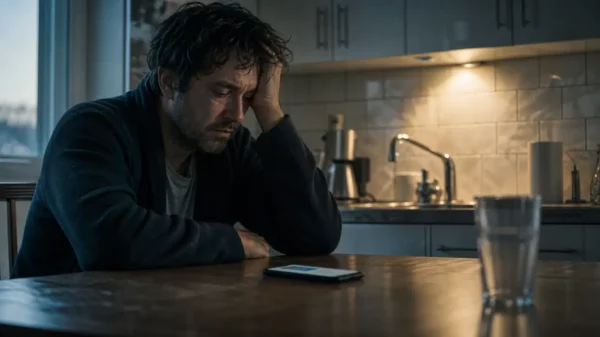


After a relapse, people often reach for the harshest explanation: “They did not really want recovery,” “they were weak,” “they chose it.” It sounds clear, but it usually does not help anyone understand what happened.
Relapse rarely comes from nowhere. It is often built from smaller pieces: exhaustion, shame, poor sleep, isolation, conflict, access to substances or gambling, old contacts, and the thought “I’m stable enough now.” At some point, those pieces become an evening the person was afraid of.
Relapse causes do not always look dangerous
Risk often starts before the drink, the drug, the bet, or the message to an old contact. It begins with small shifts: less honesty, fewer replies, skipped therapy, irritation at support, more time alone, and a growing argument that “one time will be fine.”
Stress narrows choice
Under stress, the brain looks for fast relief. If relief used to come through alcohol, drugs, gambling, or another addictive behavior, the old route becomes easier to see. “Just tolerate it” is often not enough. The person needs another way to survive the pressure.
Sleep, food, and the body matter
Sleep loss, hunger, pain, overwork, and withdrawal can all reduce the ability to think several steps ahead. A person may genuinely want recovery and still be physically in a state where impulse feels stronger than the plan.
Shame pushes people into silence
Shame says: “Hide,” “handle it alone,” “if you tell them, they will leave.” That is how someone ends up alone at exactly the moment when connection is most protective.
Old environments bring back old roles
Sometimes relapse begins with “I’ll just meet them,” “I’ll just look,” “I’ll just open the chat.” Places, people, routes, apps, music, smells, and money can activate body memory faster than a person can reason through it.
This does not mean someone must fear every street forever. But in early recovery, old access points need honesty. If the path to risk is too short, relapse stops being a surprise.
Why abstinence alone is not protection
After weeks or months without using, a dangerous confidence can appear: “I’m different now,” “I can test myself,” “I’m not that person anymore.” It can feel good, but it does not replace support, treatment, and a safety plan.
Research on relapse factors in alcohol use disorder describes a layered picture: personal, social, clinical, and environmental factors can reinforce one another. Time in recovery matters, but time alone does not erase vulnerability.
Mental health and co-occurring conditions
Depression, anxiety, PTSD, bipolar symptoms, psychosis, chronic pain, and other conditions can raise relapse risk, especially when someone has been using substances or gambling to manage distress. In those cases, “just stop” misses the point.
A clinician may need to assess mood, sleep, medication, withdrawal, safety, suicidal thoughts, violence risk, access to substances, and the support system around the person.
Craving does not mean someone wants to destroy their life
Craving can be sudden, physical, and convincing. It does not always feel like a thought. Sometimes it is pressure in the chest, anger, emptiness, shaking, a smell, an image, a route, or a notification sound.
The goal is not to feel ashamed of craving. The goal is to recognize it before it starts giving orders.
Family pressure can become a trigger too
Families often speak from fear: “Look what you did to us,” “if you relapse, do not come back,” “you have to prove yourself.” The fear may be understandable. But humiliation and total surveillance rarely make recovery safer.
Families usually help more by holding clear boundaries: not automatically covering every consequence, not tolerating violence, not making empty threats, and talking specifically about safety, treatment, and red-zone actions.
Causes that should not be managed at home
Severe withdrawal, seizures, confusion, psychosis, loss of consciousness, overdose risk, suicidal thoughts, threats of violence, or dangerous behavior are not situations for a home discussion about causes. They require urgent local medical, crisis, or emergency help.
Be especially careful with alcohol, benzodiazepines, opioids, and mixed substances. Stopping without medical support can be dangerous.
How to understand a relapse afterward
A useful review is not an interrogation. It rebuilds the chain:
- What was happening in the 72 hours before relapse?
- Where did isolation begin?
- What was happening in the body: sleep, food, pain, withdrawal, medication?
- Which people, places, money, apps, or routes moved risk closer?
- Where could help have been requested but was not?
- What needs to change in the safety plan today?
A psychologist’s view
Relapse does not need to be excused, but it does need to be understood. Blame gives a quick burst of anger and then leaves the same risk chain untouched.
When someone sees the causes, they are less trapped by the sentence “something is wrong with me.” A more useful sentence becomes possible: “I know where my old path starts, and I can put help there earlier.”
FAQ
Why does someone relapse if they wanted recovery?
The wish to recover can be real, but relapse risk is affected by stress, craving, sleep, environment, access to substances or gambling, mental health, withdrawal, and support. Relapse often grows from a chain of factors.
Is relapse caused by weak willpower?
Relapse should not be reduced to willpower. Responsibility matters, but addiction is also shaped by behavior, brain mechanisms, stress, environment, and access to care.
What are common causes of relapse?
Common causes include stress, isolation, old environments, strong craving, shame, sleep loss, conflict, withdrawal, easy access to money or substances, and no plan for crisis moments.
What should a family do after relapse?
First check safety. Then talk about facts, boundaries, and help: clinician, therapy, support group, and a safety plan. Avoid turning the conversation into an interrogation or automatically rescuing every consequence.
When is urgent help needed after relapse?
Urgent help is needed for overdose risk, severe withdrawal, seizures, confusion, psychosis, loss of consciousness, threats of violence, suicidal thoughts, or dangerous behavior.
OpenHalt
OpenHalt talks about relapse without shame and without reducing it to weak willpower. If you can see your own risk chain or relapse has already happened, silence is not the safest place.
You can start with one message: what happened, what was going on in the 72 hours before it, and what kind of help is needed now.
If there is overdose risk, severe withdrawal, suicidal thoughts, threats of violence, or dangerous behavior, seek urgent help in your country first.
Join the chat “Why did I relapse?”
Keep reading
- Addiction relapse abroad: why recovery can feel harder in emigration
- Motivation for recovery and the comfort zone
- Addiction recovery safety plan
Sources
- NIDA, Principles of Drug Addiction Treatment: A Research-Based Guide, Third Edition – principles of comprehensive addiction treatment and care planning.
- WHO, mhGAP guideline for mental, neurological and substance use disorders, 2023 – guidance for mental health and substance use disorder care.
- WHO/UNODC, International Standards for the Treatment of Drug Use Disorders, 2020 – standards for evidence-based treatment of drug use disorders.
- Sliedrecht W et al., 2019, Alcohol use disorder relapse factors, PMID 31174033 – systematic review of relapse factors in alcohol use disorder.
- Chen K et al., 2020, Physiological responses to acute stress in alcohol-dependent patients, PMID 32994116 – review of stress-related physiological responses in alcohol dependence.
- Li W et al., 2017, Mindfulness treatment for substance misuse, PMID 28153483 – systematic review and meta-analysis of mindfulness-based approaches for substance misuse.
- NICE CG51, Drug misuse in over 16s: psychosocial interventions – psychosocial interventions for drug misuse.
- NICE CG115, Alcohol-use disorders: diagnosis, assessment and management – guidance on assessment and management of harmful drinking and alcohol dependence.